Monday, June 30, 2008

Aluminum Die Casting Alloy Information

Die Casting Aluminum Information

Die Casting, A Brief Description:

Diecasting is a manufacturing process in which molten metal is injected, under pressure, into a hardened steel die or also called mold. Dies are often water-cooled. Dies are then opened, and the die castings are ejected (many times thousands of parts each day, sometimes only a few hundred). Once the tooling is paid for, die casting is a very inexpensive aluminum part manufacturing process.

Aluminum die casting Alloy Information:

ALUMINUM DIE CASTING ALLOY MATERIALS

Aluminum die casting alloys
A360 Aluminum
A380 Aluminum
A383 Aluminum
A413 Aluminum
Silicon (Si)
9.0-10.0
7.5-9.5
9.5-11.5
11.0-13.0
Iron (Fe)
2.0
2.0
1.3
2.0
Copper (Cu)
0.6
3.0-4.0
2.0-3.0
1.0
Manganese (Mn)
0.35
0.50
0.50
0.35
Magnesium (Mg)
0.4-0.6
0.10
0.10
0.10
Nickle (Ni)
0.50
0.50
0.30
0.50
Zinc (Zn)
0.50
3.0
3.0
0.50
Tin (Sn)
0.15
0.35
0.15
0.15
Others
0.25
0.50
0.50
0.25
Aluminum (Al)
Balance
Balance
Balance
Balance

Other Die Casting Technical Information

Sunday, June 29, 2008

Keeping Good Employees


The die casting employment market for manufacturing is finally back in full swing. After 4-5 years of outsourcing, downsizing and complete company shutdowns the employees in Die Casting Manufacturing

finally have a choice again. Many employees were holding on to existing jobs to wait out the drought and the storm out there. Others were not so lucky and had to find a new job - either in the same field or in a different career path. In most cases an employee ended up with less money and a smaller benefits package. Employers had the choice and could push their requirements and options knowing that the employees had not much choice.

But now things are changing again and if a die casting employer was using the low salary with no benefits approach for the last few years he better is prepared for the backfire. Employees read the same publications and the same statistics as the employers does. The employees know everything about outsourcing, right sourcing or best sourcing or whatever acronym employers came up with to disguise the fact that work can eventually be done for less by someone else. Employees also know when the market starts picking up again and an employer turning a blind eye to that fact can shoot himself in the foot this way.


Saturday, June 28, 2008

Spencer Die Casting

Spencer Die Casting Co.
6358 Wilmington Avenue
Los Angeles, California 90001
323-585-0954

William “Bill” Jordan was working for Alloy as a die casting machine operator until the war. Bill Jordan was drafted December 2nd, 1941 into the Army 187th Engineers. After the war, Bill returned to Alloy but wanted to become a tool and die maker so he went to Spencer Die Casting as a tool and die maker.

From 1946 to 1969 Spencer Die Casting grew as a die casting company and made tooling for other die casting companies. In 1969 Bill Jordan got ownership and became a partner with JB Spencer. Carl Spencer left the company and went to work for Del Mar.

In 1970, the owners of Spencer Die Casting, JB Spencer and Bill Jordan, bought Reliable Die Casting in Los Angeles and moved their die making operation to Reliable's location. Reliable was a die casting company that made diecasting parts.

During the years 1969 through 1975 Daniel "Tom" Jordan worked part time for his dad, Bill Jordan during summers and after school. From 1976 through 1986 Tom worked on and off at SDC as needed.

January 14th 1991, Tom Jordan bought out JB Spencer and purchased Spencer Die Casting. JB died soon afterward in May 1992 Carl Spencer also died in 1992. Bill Jordan stayed involved with Tom part time to help and direct operations. Bill remained active in the business many years. Bill is 86 years old and lives in Fullerton, California.

October 13th 2000, Spencer Die Casting had a fire that took away one third of the building. A lot was lost in the fire that included the bonded storage room, the secondary process room and die storage room. One third of the building was never rebuilt. Tom Jordan lost a lot of money replacing lost items and he lost some of his desire to continue operations.

In May 2006, Tom Jordan was given notice that his lease was not going to be renewed and he needed to move out after 35 years in one location. Tom could not move his company and serve his customers, so Tom sold the assets and goodwill to Kinetic Die Casting.

Tom Jordan is consulting Kinetic Die Casting on the many jobs that he transferred with his many years of experience.

Thursday, June 26, 2008

Aluminum Door Handles

Hardware Door Handles are made to be touched, pulled and turned. Handles are a hardware item that is made to manipulate by a human hand (hand-le). Handles are installed on any item that needs manipulation by the human hand. Handles are used on the door of a home to open and close the door. Door handles sometimes are able to lock to prevent the door from opening. Door handles are used on cars to open and close car doors. These handles are pull handles because they are typically pulled to pull open the car door. Doors on cabinets are special types of pull handles. These pull handles are more decorative and pleasing to the eye. These handles are sometimes ornate in design and have an unusual feel to make the cabinet more valuable. Horizontal pull handles are widespread, including drawer pulls, handles on latch less doors and the outside of car doors. The inside controls for opening car doors from inside are usually pull handles, although their function of permitting the door to be pushed open is accomplished by an internal unlatching linkage. Some door handles do not seem like handles at all. A fire door has a push bar that is the door handle. In a sense, the push bar is a door handle. Door Handles are Hardware Items.

Aluminum Sand Casting Lighting Fixtures

Aluminum Die Casting Lighting Fixture Parts from aluminum sand castings. A customer who is a lighting parts manufacturer purchases an aluminum sand casting fixture for his lighting products. This sand casting is an "Aluminum Trolley Mount" used to hold his lighting fixtures from the ceiling in a room. This aluminum trolley fixture has to be strong and look good to be part of his lighting products. He has been using this aluminum sand casting for quite a long time. The initial sand casting cost less to get started with a new product line and die casting cost a little more. The sand casting tooling costs less than $5000 to get started and the part price in this case is about $70 each part. My customer buys about 50 parts a month. His total cost to purchase these castings in a year after the tooling is paid for would be $70 per part times 12 times per year times 50 parts per month ($42,000 per year). Can this part be cost effectively produced as an aluminum die casting lighting fixture?

Aluminum Lighting Fixture Die Castings
The die casting part will require die cast tooling. This tooling will take about 10 weeks to be made and will cost about $28,000 to be made. This seems too expensive for some but if the annual total cost is calculated it will show that the tooling cost is justified. The part price in this case is $8 each part. A simple calculation will show the cost of the die castings with the die casting tooling will be better than the cheaper sand casting price.

Aluminum Die Castings
Part Price --- $ 8.00
Annual Quantity --- 600
Total parts cost --- $4,800
Tooling cost --- $28,000
Total product cost --- $32,800

Aluminum Sand Castings
Part Price --- $ 70.00
Annual Quantity --- 600
Total parts cost --- $42,000
Tooling cost --- Paid for already
Total product cost --- $42,000

The aluminum die casting option will cost about $9,000 less the first year and over $30,000 less each year afterwards. Die casting aluminum is a better option.

Tuesday, June 24, 2008

Golf Swing

A full golf swing is the desire of every golfer. You know that a full golf swing is needed to produce maximum golf club head speed and ultimately golf club distance. You’ve probably heard your golf teaching pro say, “You are not getting a full golf swing”. It is easy to analyze, but much harder to come up with a solution. A full golf swing is impossible to achieve if you do not have a higher level of golf-specific strength and flexibility.

A full golf swing is considered a 90 degree shoulder turn, with a 45 degree hip turn. This is what we read in all the analyses of the golf swing. Achieving the above physical components in your golf posture proves almost impossible for the senior golfer who has declining physical abilities. A 50-70 year old golfer who has lost a ton of yards off the tee and scores get higher and higher?

To achieve golf performance doesn’t mean hitting more balls at the range or taking more lessons. In fact, you can eliminate hitting balls altogether for a short time while you get your body back in tip-top shape.

A Quick Tip – Focus on rotational strength and flexibility to make a full golf swing! You can even do this sitting in your chair. Reach around the back of your chair and rotate your upper body, while leveraging your opposite arm against the chair. This is a simple, yet very effective rotational stretch you can do all day long.

Don’t need fancy, expensive equipment to improve your physical abilities, but a simple and effective program will do wonders for achieving your full golf swing.

Friday, June 20, 2008

Aluminum Box Castings

Aluminum Box Castings are aluminum boxes made as aluminum die casting. These aluminum boxes are produced at the rate of hundreds to thousands each day in the aluminum die casting process. The box and cover may be diecasted at the same time for a smaller aluminum box and cover.

Aluminum Box Castings are a natural RF or EMI shield for your electronic components. What is RF or EMI shielding, you may ask? What does RF and EMI shielding mean? RF (Radio Frequency) and EMI (Electrical Magnetic Inductance) are electronics terms for protection. RF/EMI shielding blocks radio waves and radio frequency from interfering with the electronics inside the aluminum box or prevents the electronic frequency from inside the box from interfering with items outside the aluminum box.

How does an aluminum box block RF/EMI? Aluminum is a very electrically conductive material. Electricity flows easily through aluminum. A box made in aluminum would be electrically conductive. Items placed inside an aluminum box can take advantage of this electrical conductivity in many ways. Discussed here is the way radio waves disperse and are absorbed by the aluminum thus protecting electronics inside an aluminum box.

Aluminum boxes, because they are electrically conductive are a natural ground. Aluminum boxes are many times used as a “grounding plane” for the electrical components inside the aluminum box. This “ground” in this case is a common electrical circuit. Just like the chassis of the typical American Car, sometimes referred to the “negative pole” or “ground” of your car battery.

RF/EMI shielding are just a few of the many reasons aluminum boxes should be made using aluminum die casting. Kinetic Die Casting, Inc. will be happy to assist in your design and manufacture your aluminum box castings for your products.

Tuesday, June 17, 2008

Party Chocolate Fountain

Chocolate Fountains are a great gift for anyone you love. Everyone loves chocolate and everyone loves a chocolate fountain. Chocolate fountains create a fondue of molten chocolate that flows in the form of a fountain. Once the chocolate is flowing, it will flow until the chocolate is completely eaten. Chocolate flowing in the fountain makes a great centerpiece for most occasions. Chocolate fountains are used at wedding receptions, at bridal showers, at baby showers, at school functions and any home party.

As the chocolate flows from the bowl through the tube to the top of the fountain and down back to the bowl, friends will dip many types of edible objects into the flowing chocolate. These items typically are pretzels, bananas, red apples and green apples. Some times people try items such as grapes or oranges and pineapple slices to be different.

There are many types of rich chocolate that can be used in a chocolate fountain. Typically people will use grocery store chocolate chips. But there are many wonderful chocolates that can be used instead. Some people prefer dark chocolates to get a very different flavor and effect on the foods eaten in the flowing chocolate. White chocolate is also very different and very sweet. Some people use their chocolate fountains for other things like barbeque sauce and juices.

Chocolate fountains
are sold in many stores and on-line for very little money. There are many inexpensive chocolate fountains for as little as $40.00 and some that sell for over $1,000.00. At any price the chocolate fountain is a worthwhile investment.

Monday, June 16, 2008

Aluminum Heatsink Heat Dissipation

Aluminum heatsinks are commonly made using aluminum die casting. Aluminum die cast heat sinks are manufactured near net shape, meaning these heat sink parts require very little additional machining to use in the desired application. These aluminum heatsinks can be produced at the rate of thousands each day. In many cases, these heat sinks can be installed and used without any additional finish such as powder coat or anodize.

Heat dissipation is the job aluminum heat sinks perform. Heatsinks are typically used in locations where heat needs to be dissipated such as in hydraulics and more typically in electronics applications. In hydraulic applications, heatsinks use air cooling or water cooling to assist in extracting the heat from the protected device. In electronic applications, heatsinks are more commonly expected to work using air-flow to extract heat.

When fluids are placed under extreme pressure, heat is generated. Heatsinks are used to prevent damage to the bearings or other moving parts in the hydraulic device.

Some heatsinks have been used in computers to remove heat from the electronic circuitry, this extends the life of the “motherboard”. One of the early applications of a heat sink was the aluminum shroud on the television picture tube to extend the life of the picture tube. Now, aluminum heatsinks are designed in most electronic applications to protect the devices from the heat that is naturally generated when electricity interacts with electronic circuits. Many times these heatsinks are incorporated in the enclosure or housing that holds and protects the electronic circuits. This would take advantage of incorporating two devices into one, thus saving money doing so.

Sunday, June 15, 2008

Hardware Brackets in Aluminum

Many products in homes need brackets. Chocolate Fountains use brackets to hold the parts together into a finished product. The heater plate in the chocolate fountain requires an "aluminum hardware bracket" to keep it into place. Lighting Fixture Brackets made in aluminum are considered "aluminum hardware brackets". These light fixture brackets replaced the old lantern holding brackets of many years ago. Stables and barns also require brackets to hold items on the walls and to secure items in place. Smaller brackets are used in wood furniture for holding drawers together, holding shelves in cupboards and holding mirrors onto dressers. Other applications include: towel racks, book shelves, and toilet paper holders.

Home building companies use bracket items in several places. These brackets are used in many applications to hold items in place. Old wood framed windows used brackets to keep the correct angle of the wood window frames. Brackets tend to be angular to hold items up on walls or hold items away from walls. A 90 degree bracket could hold a shelf up on a wall or act as a brace to hold two walls together.

Construction people use brackets, called braces, to hold wood beams at the correct angle. Brackets are incorporated in home electrical boxes to hold these boxes into place and at the proper angle. Aluminum Hardware Brackets have many uses around your home and in new construction of houses.

Aluminum Brackets are made using the aluminum die casting process many times replacing other, less economical processes.

Saturday, June 14, 2008

Aluminum Car Parts long ago

Most of the parts made for cars (automobiles) are made from aluminum. Aluminum is a light and strong metallic alloy. Aluminum is corrosion resistant and also durable. When cars were first on the road, most of the parts were made from iron or steel. It was thought at the time that steel and iron were strong and that parts for cars needed to be strong. It would surprise most people the percentage of aluminum car parts are in many automobiles.

Thursday, June 12, 2008

Aluminum Plate Die Casting


Aluminum Plate Castings

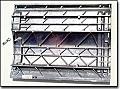
Aluminum Plates are many times made by diecasting the part. This aluminum plate was die cast because there is a lot of detail on this side. Aluminum Plate Diecasting

This aluminum plate is very strong and can withstand thousands of pounds of force from the top and the ribs prevent the plate from collapse. This aluminum plate is another example of how diecasting can be a better resource than other aluminum manufacturing processes.

Aluminum Die Casting History

Aluminum Die Casting has evolved from the original low-pressure injection method to techniques including high-pressure die casting. These modern processes are capable of producing high integrity, near net-shape aluminum die castings with excellent surface finishes.

Aluminum Die Casting has been around a long time. The earliest examples of aluminum die casting by pressure injection - as opposed to casting by gravity pressure - occurred in the mid-1800s. A patent was awarded to Sturges in 1849 for the first manually operated machine for die casting printing type. The process was limited to printer’s type for the next 20 years, but development of other shapes began to increase toward the end of the century. By 1892, commercial applications included parts for phonographs and cash registers, and mass production of many types of parts began in the early 1900s.

Today, Aluminum Die Casting is used in many aluminum part manufacturing products, such as: Automobile parts, Airplane parts, Light Fixture parts and Hand Tool parts.

There are Aluminum Die Casting manufacturing companies all over the world and in almost every continent. Look at the products in your home, car or where you work and notice the many aluminum die casting parts used in the products manufacture.

Monday, June 9, 2008

Die Casting Tooling for Aluminum Knobs

Today work was going into making Die Casting Tooling for Aluminum Knobs. The tool is almost finished. We still need to engrave it and mount it into the mold base. This is a surprise that a die casting tool can be completed so quickly.
Aluminum Parts Die Casting Company