
Showing posts with label amplifiers. Show all posts

Tuesday, October 4, 2016

Die Casting Guitar Amplifiers

Guitar amplifiers were at first used with bass guitars and electronic keyboards, but when broader-bandwidth sounds are needed, other instruments use a suitable full-range speaker system and different power level. Much more amplifier power is required to clearly reproduce low-frequency pitches produced by bass guitars and electronic keyboards, especially at high volumes.

Sometimes guitar amplifiers used with electric guitars are solid state, because they are easy to repair, lighter-weight, and less expensive. Despite the drawbacks of vacuum tube amps, such as their heavy weight and the need to periodically pay to re-tube and re-bias the guitar amp (every year or two with moderate use), many guitarists prefer the sound of vacuum tube guitar amps, particularly in the genres of blues and rock. There are modern tube guitar amplifier companies that are designing fixed-biased guitar amps that require no tube biasing so long as the proper rating tube is used. There are also tube amps designed to make biasing very simple for the user.

Modern guitar amps use aluminum die castings and a mixture of both tube and solid-state technologies, with 1960s vintage vacuum tubes next to integrated circuits. With the advent of microprocessors and digital signal processing in the late 1990s, modeling guitar amps were developed that can simulate a variety of well-known guitar amplifiers' vacuum tube sounds without necessarily using vacuum tubes. A new guitar amplifier with special processors and software can emulate the sound of a classic guitar amps almost perfectly, but due to the digital element of modeling the response of these amplifiers from the player's point of view is not quite the same. "Hard core" tube guitar amp fans may not be able to tell the difference, in a blind auditory test, but will most always choose to play a tube guitar amp because of its analog sensitivity.

Kinetic Die Casting is a die casting company that manufactures parts like aluminum car parts, airplane parts, lighting parts and much, much more. If you would like to request a quote, please visit our website:Die Casting price quote

Thursday, September 19, 2013

Die Casting and Its Many Advantages

DieCasting and Its Many Advantages. The diecasting process offers many advantages that manufacturers and consumers alike can find highly convenient and simply wonderful. Depending on what they are to be used for, die cast parts can turn out to be virtually anything as far as design and detail are concerned, including shape, size, dimensional tolerance, and textural finish.

Aside from being versatile, the diecasting process is also economical so you can expect to have relatively cheaper die cast parts as opposed to the parts produced by other casting methods. The reason for this is that production costs are kept to a minimum when the die casting method is used. This is because aside from normal human labor, machining and tooling are seldom required in post-production tasks. In cases where die cast parts do need the use of machines and tools for finishing touches, the amount of assistance is not so significant as to warrant expensive production. Thus, when you buy die cast parts, you don’t have to burn big holes in your pocket.

What many manufacturers find extremely of value in the diecasting process is the ability of die cast parts to be recycled. Alloys for die casting provide die casting designers with post-consumer reusability, one of the most coveted material options in any industrial market these days. If you go for die cast parts, you’d actually be taking part in a considerable effort to save the environment and the entire planet. Components used in the die casting method can maintain their quality through repair, remanufacturing, and reassembly. When their lives end, there is still great potential for die cast parts to become part of high-performance applications. It is clear that die cast parts are useful in more ways than one, and that the die casting is a process worth patronizing. For instance, Cast aluminum parts for music is one such example of die casting.

Sunday, August 9, 2009

Attaining Strong and Lightweight Aluminum Parts

Attaining Strong and Lightweight Aluminum Parts with Low Production Cost. The invention of powerful die casting machines and refinement of the die casting process paved the way for mass producing metal alloy parts.

With the use of aluminum, the cost of producing high quality metallic parts also became cheaper. Aluminum parts types are the cheapest finished product that can be produced from die casting process.

This allows companies to boost their profit levels because they can mass produce aluminum parts types faster but at a much lower overhead. This also reduced the cost of metallic finished products because assemblers can use cheaper but high quality aluminum parts types.

Aluminum parts are also lightweight but are stronger than other types of metal alloys. That is why aluminum parts are commonly used in the airline and car manufacturing industries. Aluminum parts can also be made as container boxes and enclosures.

For example, a computer hard disk uses aluminum enclosure which was made through the die casting process. Because aluminum can conduct electricity, it would be easier for manufacturers of electronic products to ground the aluminum parts in order to protect the interior electronics of finished products.

Die cast producers favor aluminum parts because they are lightweight, versatile, and cheaper to produce. Use of aluminum parts also reduced the cost of production of different consumer and industrial goods resulting to lower market prices.

Aluminum parts are also versatile. Aside from industrial use, aluminum parts can also be used on finished consumer products such as chassis of guitar amplifiers, roofing molds, Golf Products, lighting fixtures, toys, and other common items that you can see in the market.

Saturday, September 27, 2008

Introduction To VoIP

If you have an ear open to new computer technologies, you are sure to have heard about VoIP. Voice over Internet Protocol (VoIP) is an emerging set of applications which allows you to make telephone calls over the Internet. It is already starting to replace existing telephone networks, with some people and businesses opting to cancel their traditional phone line and use VoIP instead.

VoIP was originally developed to provide voice communication between computer users in different locations. Although it still has this application, it has been further developed into a telephone network in its own right. People using VoIP can call any telephone anywhere in the world and can receive calls on telephone sets connected to the Internet or Local Area Network (LAN).

Background

It all started back in 1995 when Israeli computer enthusiasts made the first computer to computer voice connection. In the same year this technology was developed into a software package called Internet Phone Software. All that was needed to talk to another computer user was a modem, sound card, speakers, and a microphone.

The software digitized and compressed the audio signal before sending it over the Internet in data packets. These voice connections could only occur between computers which had the software installed. The sound quality was very poor -- nowhere near the quality of standard telephone connections.

The technology continued to be developed and by 1998 gateways had been established to allow PC-to-phone connections. Later that same year phone-to-phone connections that used the Internet for voice transmission were set in place. These phone-to-phone connections still required a computer to initiate the call, but once the connection was established, the callers could use a regular phone set.

VoIP Today

There are currently many VoIP services available for residential and commercial use. Some of these still rely on PC-to-PC connections but may offer other services such as PC-to-phone and phone-to-phone.

Internet phones are available that plug into the sound card or USB port of a computer. These phones may have number pads and ringers that allow you to use them the same as traditional telephones. The computer can be bypassed completely by connecting a phone directly to a broadband modem (either DSL or cable).

How Does It Work?

The first step in using VoIP is converting your voice into digital data. This is done by 'sampling' your voice -- dividing the analog sound signal into discrete steps that can be assigned a number value. Once your voice is digitized, the data can be compressed. Audio Amplifier.

This compressed digital data is split up into 'packets' of about 1500 bytes that can be transferred over the Internet. As well as the voice data, the packets contain information about their origin, their destination, and a timestamp that allows them to be reconstructed in the correct order. Once they arrive at their destination, they are reassembled and converted from digital back into analog so that the receiving party can hear your voice.

In order for voice data to be transmitted without noticeable delays, a broadband Internet connection is necessary. Many households and businesses are already using broadband (either DSL or cable) so adding VoIP is relatively simple.

Tuesday, February 26, 2008

Guitar Amplifier Chassis Housing


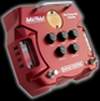
Guitar Amplifier Chassis Housing. The Solid Metal dual-tube distortion pedal produces massive, face-melting gain. Flexible controls let you dial in metal tones from the 80's to beyond tomorrow. The unique shape of the Bass control adjusts the speaker's resonant response for the proper level of chest-thump during tight palm-muted passages, while the Scoop and Treble knobs sculpt and top off your tone to perfection. seocontest2008


# Dual 12AX7 tubes biased at 250V internally
# Aluminum die-cast guitar amplifier chassis by Kinetic Die Casting
# Switchable 20DB nuclear gain boost
# Unique Bass control adjusts the guitar resonant speaker response
# Scoop control for massive tone-shaping for guitar
# Advanced-order Treble control for detailed high-end guitar response
# Comprehensive guitar LED indicators
# Power supply included
# Remote switching

Kinetic Die Casting makes these and many other products.

Monday, February 18, 2008

Guitar Amplifiers

Some guitar amplifiers used with electric guitars are solid state, because they are easy to repair, lighter-weight, and less expensive. Despite the drawbacks of vacuum tube amps, such as their heavy weight and the need to periodically pay to re-tube and re-bias the guitar amp (every year or two with moderate use), many guitarists prefer the sound of vacuum tube guitar amplifiers, particularly in the genres of blues and rock. There are modern tube guitar amplifier companies that are designing fixed-biased guitar amps that require no tube biasing so long as the proper rating tube is used. There are also tube amps designed to make biasing very simple for the user. seocontest2008

Monday, January 28, 2008

Guitar Amplifiers

Guitar amplifiers were at first used with bass guitars and electronic keyboards, but when broader-bandwidth sounds are needed, other instruments use a suitable full-range speaker system and different power level. Much more amplifier power is required to clearly reproduce low-frequency pitches produced by bass guitars and electronic keyboards, especially at high volumes.

Aluminum die casting guitar amplifier housing parts.

Some guitar amplifiers used with electric guitars are solid state, because they are easy to repair, lighter-weight, and less expensive. Despite the drawbacks of vacuum tube amps, such as their heavy weight and the need to periodically pay to re-tube and re-bias the guitar amp (every year or two with moderate use), many guitarists prefer the sound of vacuum tube guitar amps, particularly in the genres of blues and rock. There are modern tube guitar amplifier companies that are designing fixed-biased guitar amps that require no tube biasing so long as the proper rating tube is used. There are also tube amps designed to make biasing very simple for the user.

Monday, September 10, 2007

Amplifier for Guitars

Some guitar amplifiers used with electric guitars are solid state, because they are easy to repair, lighter-weight, and less expensive. Kinetic Die Casting produces a light weight Guitar Amplifier Chassis for an amplifier manufacturer. We use the Aluminum Parts Die Casting process to make these parts. Despite the drawbacks of vacuum tube amps, such as their heavy weight and the need to periodically pay to re-tube and re-bias the guitar amp, many guitarists prefer the sound of vacuum tube guitar amps, particularly in the genres of blues and rock. There are modern tube guitar amplifier companies that are designing fixed-biased guitar amps that require no tube biasing so long as the proper rating tube is used.
Aluminum Parts Die Casting Company
