Showing posts with label cars. Show all posts

Tuesday, November 24, 2015

Aluminum Auto Parts--Who uses Them?

Aluminum Auto Parts are Now Widely Used by Many. Before, most of the car parts were made from steel or iron because manufacturers believed that a car must be strong, hence, strong metals must be used in making its parts. However today, majority of cars are built with aluminum auto parts. First, aluminum is lightweight, reducing the total weight of the automobile, allowing it to get better fuel economy. It is also very strong and non-corrosive. The top car manufacturers love die cast aluminum auto parts because thousands of parts can be produced annually at a very low cost. Others even have contracts with aluminum die casting companies to produce aluminum auto parts for them. There are also companies which manufacture auto parts intended to be sold in stores. Manufacturing companies prefer die cast aluminum auto parts than those produced by forging, extrusion, or other manufacturing processes primarily because die cast parts are less expensive and of better quality.

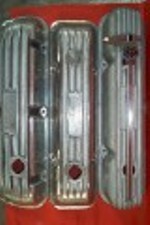
Aluminum auto parts include aluminum die cast handles, aluminum valve aluminum covers, aluminum brackets, and aluminum wheels. The handles are used for car doors and other aluminum hardware handles used for opening the trunk, console and hood of the car. The valve covers are usually die cast because die cast valve covers already has a chrome look even without chrome plating. Valve covers also need to disperse heat and aluminum is an effective material for thermal transfer. The brackets hold many of the car’s engine components into place. These also hold the air conditioner and alternator in place. The wheels are made from aluminum, not magnesium, which is a common misconception. Aluminum can also be polished to a high sheen, making it ideal for wheels.

Kinetic Die Casting can manufacture aluminum automobile parts, heat sinks, aerospace parts and much more. If you are looking for aluminum or zinc parts, visit our website Kinetic Die Casting Company

Tuesday, November 10, 2015

Die Cast Auto Parts

Aluminum Die Cast Auto Parts include radiators, carburetors, gas tanks, valve covers, mirrors, air filter adapters, exhaust systems, body and closure panels, door and trunk handles, auto lamp parts, engine brackets, wheels, master cylinders, ornaments and logos among others.

Die casting is the manufacturing procedure of forcefully inserting molten metal, in this case aluminum, into a steel mold or die and making it solidify to form metal parts. Aluminum is one of the top choices in die casting because it is lightweight, malleable or flexible, and has a high electrical and thermal conductivity. Aluminum has a fatigue or endurance limit that is not yet defined as compared to steel. It surely has very high fatigue strength, perfect for constructing materials that will last for long periods of time.
Moreover, the Aluminum Die Cast Auto Parts, also called aluminum castings, are exceptionally durable and highly resistant to corrosion. Thus aluminum castings are even utilized in military equipment and automotive parts. In the military, aircrafts, missiles, torpedo boats, and armored vehicles such as tanks all contain aluminum castings. Aluminum is also used in lighting fixtures, lawnmowers, heat sinks, medical and dental equipment, roofing tile molds, golfing products, amplifiers, hand tools, typewriter frames, and even kitchen paraphernalia.
Everybody knows what aluminum is since it is used in countless materials and products. Aluminum, known for its low density and ductility as well as its durability and corrosion resistance, has become a wonder metal that can be used in so many ways.
Kinetic Die Casting is a die casting company specializing in aluminum and zinc parts. If you would like to request a quote, please visit our website:Kinetic Die Casting Company

Thursday, November 6, 2014

Kinetic Die Casting Makes Aluminum Car Parts

Real Steel on Wheels: Kinetic Die Casting Company makes aluminum car parts. Why is it that some automobiles are easier to drive because they are lighter? It might be supposed that the lighter a car, the less tough its parts are. But Kinetic Die Casting Company makes aluminum metal car parts in a way where the car part can even be tougher than steel and other metals.

The procedure of die casting entails inserting liquefied metal inside a steel die. With both high pressure and speed, the melted metal is pushed inside the die and therefore hardens into more tough metal products as the molten metal steadies. In this case, Kinetic Die Casting Company makes aluminum car parts out of hardy aluminum alloy. It is public knowledge that aluminum is a metal element that is soft, light, malleable and yielding. However, with high pressure manufacturing procedure, Kinetic Die Casting is able to make good quality car parts sturdy enough to endure low-cost destruction. And because they use aluminum alloy, this company’s manufactured car parts have a lighter weight equated to those made from other metals such as iron, lead, copper, and so on.

However, it is established that the products made have robust, enduring quality. What is even astonishing is that Kinetic Die Casting Company makes aluminum car parts in inexpensive prices. Aluminum, after all, is cheaper and easier to produce. One could see the usefulness of the company regarding its improvised manufacturing methods of manufacturing metal products and the company’s helpful economic influence, by merely making stout yet cheaper car parts.

Kinetic Die Casting blog on Blogspot, makes Aluminum Parts using die casting to make Aluminum Heat Sink Parts. Look at this website page for more details: www.kineticdiecasting.com/heatsink.html. Contact Kinetic Die Casting Company at 818-982-9200 or email us at sales@kineticdc.com. Use this webpage to request "die casting part prices" www.kineticdiecasting.com/replyform.html

Thursday, April 17, 2014

Different Looking Speaker Parts

Different Looking Speaker Parts. The speaker is one of the fun creations of mankind. It may not have as vital a use as the upmost inventions like wheels, airplane parts, telephone, but without speakers, there are a lot of things man would not enjoy.

How does a small device like a radio, cellular phone, television, etc. manufacture so much and so loud a noise? To answer this question, it is worth taking a look into the different speaker parts.

Basically, there are 9 main speaker parts, to with: the back plate, the pole, the magnet, the top plate, the basket, the coil, the spider, the cone and the dust cap. These parts are accountable for switching the sound into something that can actually be interpreted by a man's sense of hearing.

All of the above mentioned speaker parts are normally embodied in a box. This is where the drivers and a crossover network, if there is any, are housed. This is where everything is neatly organized, so that what a person sees is just one thing that is called the speaker, and the speaker parts are left to be mere parts that a regular person need not know about.

In one speaker, there are different drivers. Drivers are part of the speaker that let go audio signal. The convert the audio signal that are in the electrical form to sound waves, that which a human ear could hear. These signals must be separated and the speaker part that does this function is the crossover network.

The drivers are the rounded thing that one sees inside the box. This is the one that beats and bounces when discharging big and loud sounds. This is not the speaker itself. This is just one of the countless speaker parts. The speaker is the whole system, including the box.

There are various kinds of drivers. They all have differences, especially in terms of size . Some drivers are extremely tiny to fit an ear. These are the drivers used in earphones. There are drivers that are of regular size, as those that are found in a small boom box or in the doors of cars or in other car parts. There are also enormous drivers, like those that can be seen in clubs, bars or in areas where loud sounds have to be released.

Drivers come in different sizes, styles and brands. But , drivers have one function. This single function is what makes the speaker what it is. The driver is the essence of a speaker. As above mentioned, this is what creates the sound. Out of electrical waves, drivers are the speaker part that makes sound capable of being heard.

Having a driver in a speaker is basic. To enhance the same, there are other parts that are being added. There are woofers and subwoofers to make the bass of the sound more prominent and emphasized.

Kinetic Die Casting blog on Blogspot, is about Aluminum Parts Die Casting for Aluminum Auto Parts Manufacturing. Look at this website page for more details: www.kineticdiecasting.com/auto.html. Contact Kinetic Die Casting Company at 818-982-9200 or email us at sales@kineticdc.com. Use this webpage to request "die casting part prices" www.kineticdiecasting.com/replyform.html

Thursday, July 25, 2013

What are Die Cast Parts and Why Use Them?

What are Die Cast Parts and Why Use Them? Die cast parts are the collective end result of a tedious process that is governed by strict principles of metallic and hydraulic science and powered by technology. This process is known all around the world today as die casting, an age-old method that has lasted for over a century now. The process involves the injection of molten metal into steel molds or dies under high pressure. There are a variety of metals that can be used for the process; whatever the choice of the manufacturer is, that particular metal is held under pressure until, finally, it hardens into a metal part carrying a net shape.

Today, the die casting process enjoys a highly marketable popularity in the metalworking industry, thanks primarily to the many advantages it offers to manufacturers and consumers alike. If you haven’t been keen on going for die cast parts, it’s about time you switch and leave your current choice of casting method for good.

The die casting process is first and foremost a versatile process that provides manufacturers and consumers with a much broader range of choices in terms of shapes, sizes, and components more than any other manufacturing technique for metalwork nowadays. Die cast parts can come out in a variety of physical appearance and with accurate dimensional tolerances, exact measurement specifications, and different finishing options – from textural feel to visual form. What’s more, die cast parts are economical to make. They don’t need much assistance from machines and tools before, during, and after production.In fact, you can make parts like golfing products, tile molds, and car parts. Both manufacturers and consumers can save hundreds of dollars when they go for die cast parts.

Thursday, July 4, 2013

Metal Mania

Metal Mania The discovery of metals is undoubtedly a great step forward in the history of mankind. It is even said that upon the seven metals of antiquity was modern western civilization founded. These seven were the first group of metals discovered by man and the ones which were first put to use in our industries. The seven metals were gold, copper, silver, lead, tin, iron, and mercury.

When man discovered ways of extracting the earth’s metals, so did civilization progress. After extracting these metals, processes for manufacturing them were learned. The metals were fashioned into desired forms by the methods of forging, pressing, rolling, and through fabrication, machining, and die casting. Due to the number of metals now available to us and their various characteristics, today’s industries all make use of metal.

A die casting company provides the needs of manufacturing industries in telecommunications, consumer electronics, the automotive industry, aeronautics, and a lot of different industrial markets. The products to be found in a die casting company are many and varied. They are machinery parts, car parts, electric motor components, carburetor bodies, fuel pumps, valves, hardware locks and bolts, cast pipe fittings, fasteners, plumbing fixtures, packaging equipment; even mobile phone antennas, die cast model cars, knobs, zippers.

The die casting method uses metals that are low melting and non ferrous. Examples of these kinds of metals are zinc, aluminum, and copper. These metals are ideal because of their characteristics of ductility, lightness, resistance to corrosion, electrical conductivity, and strength. In manufacturing them for industrial parts, a die casting company will use a die casting machine to inject the molten metal into a mold (also called a die).

Thursday, November 22, 2012

Die Casting – Extending its Role on Car Toys Collection

Die Casting – Extending its Role on Car Toys Collection. It is known to all that die casting plays a vital role in numerous types of industries. The procedure is in itself executed to be able to produce the finest quality of metal parts materials that are able to supply the finest kind of surface finishes. One of the industries that usually makes utilize of this procedure is the car industry. In fact, the collection of the die cast cars is one of the top ranking hobbies of both the men and women these days. These miniatures can be enclosed in glass and then be displayed either at the home or workplace. Some crafty individuals use time in constructing the model, framing it, and then making a fortune out of it.

As a hobby, people get occupied in car shows and then later on purchase the mini-me’s of the displayed car models. There are the ordinary kits that are sold so the enthusiasts can work on them. The technique of die casting engages the employ of both the plastic and the metal. Characteristically, the metal which is employed is known as the zamak which is essentially composed of the alloy of aluminum and zinc.


The die casting technique is used on the police cars, trucks, construction equipment, motorcycles, airplanes, buses, trains, and automobiles, to name a few. They may be individually assembled or can be bought all in one piece. Generally, these are not only fun to gather but they do prompt the collector to do work and be crafty at the same time.

Thursday, November 8, 2012

Aluminum Auto Parts will Gain Momentum

Aluminum Auto Parts will Gain Momentum. One of the most plentiful metals found on earth is aluminum. This metal is strong, flexible, lightweight, recyclable, compliant, and corrosion-resistant. These properties are factors that make the aluminum a grand alternative for material in manufacturing automobiles and aluminum auto parts.

In North America, transportation is representative of the chief market for aluminum. Where production of cars and trucks are concerned, the aluminum is the second most extensively utilized component. Top reason for this is because manufacturers are keen in improving the gas mileages of their vehicles. Since aluminum is about one-third the weight of steel, the complete vehicle mass can be condensed drastically.


Casting, rolling, extrusion, or forging can be utilized to process aluminum. When rolled under tremendous pressure, the aluminum develops thinner and longer. It becomes any of the three extensively used forms: plate, sheet, and foil.


As carmakers persist to carry out research about aluminum and how best they can utilize this metal to manufacture outstanding quality vehicles, more companies will start turning to aluminum as an alternative material to steel and iron.


These days, aluminum auto parts created of aluminum die casts include: valve covers, aluminum alloy wheels, carburetors, as well as body and closure panels, or flooring. Aluminum is still utilized at a very low quantity. Mass production will only be possible once research finds out how aluminum can actually become more helpful than steel.


Concerns for dependability and security are the major factors that stall the full blast production of chief car parts. As carmakers gain more self-assurance in the methods and techniques to create high-quality aluminum auto parts, the public is yet to drive the more economical cars manufactured out of aluminum.

Thursday, October 18, 2012

Aluminum Auto Parts: Slowly but Surely

Aluminum Auto Parts: Slowly but Surely. Many manufacturers of cars are experimenting on the utilization of aluminum auto parts. Some are also expanding their research to make it possible to utilize aluminum in all other weight-intensive gears of cars

So far, there has been a broad range of parts completed out of aluminum like engine blocks, cylinder heads, manifolds, wheels, and even body structures and closures. Carmakers are confident that soon, hoods, trunks, and other such heavy parts can also be shaped out of aluminum materials. The body alone accounts for about 25% of the whole weight of a vehicle. Using aluminum will considerably diminish the cost and offer enormous savings.


According to the Aluminum Association, Inc., the use of aluminum for automobiles doubled between the years 1991 and 1999. This is estimated to double by early 21st century. So far, aluminum has already exceeded plastic use in vehicles and is now ranking third after iron and steel.


Average weight of aluminum is expected to be one-third that of an equivalent volume of steel. There is about 60% weight reduction with the use of aluminum in vehicles instead of steel and cast iron.


Although there are so many returns in using aluminum, several engineers in car manufacturing are still yet to be persuaded about swapping steel with this metal. They put stress on aluminum being tricky to weld and that this metal has a dissimilar reaction to stress than steel.


Aluminum auto parts are seeing some use and for sure, as technology advances, there will be more use for aluminum in car manufacturing.

Thursday, September 20, 2012

Aluminum Auto Parts Now. Entire Car Soon.

Aluminum Auto Parts Now. Entire Car Soon. Pop quiz: What does James Bond and metal aluminum have in common? The answer is that well-known sports car brand Aston Martin. One of the cars that have been utilized in the movie featured aluminum exterior body panels and flooring. These aluminum auto parts manufactured the hero zoom his way on the road like the wind.

Yes, most of the gadgets we have seen in the older Bond movies may be fictional, but cars like the Aston Martin Vanquish are not. In truth, more and more automobile manufacturers have started utilizing aluminum in manufacturing vehicles like the Audi A8 and the Honda Insight.


There was a time when these carmakers avoided utilizing aluminum because of problems of cost and safety. Nonetheless, with progression in technology, aluminum is becoming a reasonable and secure choice for manufacturing of car parts. Since some companies are in a wait-and-see mode, construction of such aluminum vehicles is still moderately low.


These producers are still quite traditional about mass producing cars out of aluminum because of so many technological reasons that they want to be advanced first. There are many rewards to utilizing steel that have not been answered by aluminum yet. This is why research is endlessly being carried out to expand methods and techniques that can sustain the aluminum revolution in car manufacturing.


Many components though, are being experimented upon like engine blocks, cylinder heads, wheels, panels, and body structures. There is also a growing use for aluminum auto parts that are weight-intensive like hoods, trunks, and others.

Thursday, June 14, 2012

How are Aluminum Automotive Parts Used?

How are Aluminum Automotive Parts Used? The use of aluminum has already invaded even the automotive industry these days. Its strength, price, weight, and flexibility are some of the reasons why it is being constantly used and developed as parts of any vehicle in the market.

Aside from the basic characteristics of aluminum itself, it becomes widely used for vehicles to achieve its goal of conserving fuel mileage. Some of the most common automobile parts that are made of aluminum are alloy wheels, valve covers, brackets, handles, carburetors, flooring, light fixtures, and a lot more. Being recyclable and durable in its very essence, these parts are also corrosion resistant. It follows that using aluminum parts, the life of automobiles are preserved to stand the test of time as well.


Moreover, being resistant to corrosion, it is becoming more practical to use aluminum in car parts rather than plastic. Considering that plastic does not have the characteristics of strength, it is not a good material for vehicles especially that it is not environment-friendly and budget-friendly.


In total, aluminum automotive parts are indeed durable, cheap, recyclable, and lightweight. Though basically cheap, its durability and benefits to vehicles and people are definitely endless. Good thing that the automotive industry is constantly making ways to make use of this material.


To get a price for aluminum die casting parts or die casting tooling, call toll free 800-524-8083 and ask for sales. Or email us at sales@kineticdc.com for a fast response on a price quote.


Kinetic Die Casting Company


Thursday, May 26, 2011

Where do you find Aluminum Automotive Parts?

Where do you find Aluminum Automotive Parts? Where do you find Aluminum Automotive Parts? They should actually be found anywhere at your nearest available auto shop. You basically need such automotive parts for wheels, engine blocks, mirrors, impellers and clutch parts, etc. You could also inquire from your preferred companies, whether it be Toyota, Chevy, Nissan, Honda, or and Jeep parts from Auto Parts Train.

There are now also world auto parts suppliers that are expanding in the USA. They are looking for more consumers as well to test the quality of their automotive parts. Despite the recent economic struggles of North America, companies such as Mexico City’s Grupo Bocar are willing to compete in its open market.


Aluminum Auto Parts have become increasingly popular in the midst of car manufacturers all over the country. After all, it has been proven many times that is better compared to other types of metal such as steel because of its several properties. Aluminum can just be as strong and durable as the other metals. You could also try researching from the web for more information on the brands and companies. Some properties of aluminum are it can be cast net shape. It has good thermal properties. Plus they look good but cost less.


Kinetic Die Casting Company


To get a price for aluminum die casting parts or die casting tooling, call toll free 800-524-8083 and ask for sales. Or email us at sales@kineticdc.com for a fast response on a price quote.

Thursday, December 2, 2010

Examples of Aluminum Automotive Parts

Examples of Aluminum Automotive Parts. You love cars, because of the speed and the boost on your moral that you get whenever you are riding your favorite vehicle. You may declare your love for your cars, but do you know them well? Can you easily give examples of aluminum automotive parts? Now don't begin inspecting the insides of the vehicle because you can still learn about the matter if you will look it over at various resources.

Auto or car parts that are made of aluminum are about 1/3 the weight of the parts made of steel. Examples of aluminum automotive parts are being produced by hundreds to thousands every day. To save cost in the production and wasted materials, these parts are manufactured using the net shape, plus the savings that owners will get from getting rid of the additional cost that may be incurred from machining or getting addition labor. These parts are produced along with the mounting holes.


There are many companies that sell examples of aluminum automotive parts. You should learn about your choices and find out vital details about these before you proceed in any kinds of purchase. To find out more about this subject, you can browse over the sites that produce and market these products and read the description about the parts that you are interested into.


Kinetic Die Casting Company


To get a price for aluminum die casting parts or die casting tooling, call toll free 800-524-8083 and ask for sales. Or email us at sales@kineticdc.com for a fast response on a price quote.

Wednesday, July 16, 2008

Buying New vs Used Cars

New vs used. Which car is right for you? Consider the following.

Owning a brand new car is exciting. But financially speaking, it makes more sense to buy a used car. As soon as you drive a new car off the lot, it loses a great portion of its value. This is because your car is no longer “new”.

New cars lose about 40% of their value within 3 years, then depreciation starts to slow down. Why not buy a used car and allow someone else to take that depreciation hit?

The previous owner will have absorbed the steepest part of the depreciation cycle. At that point the costs of owning and operating the car will be reduced. The money you save on depreciation will surely go a long way.

Another benefit of buying used is lower cost. By buying used you pay less. You will also save on financing costs, insurance premiums, registration and licensing fees. You don’t have to worry about paying sales tax.

As with everything else there are a few downsides to buying a used car. There are greater chances for costly unwarranted repairs. You may very soon have to do major maintenance on your car, including replacing tires, battery, brakes, muffler, and perhaps even the transmission.

A used car is usually less reliable. You don’t know exactly what you’re getting into and how the previous owner treated the car. However, every situation is different and some used models may actually be far more reliable than some new ones.

If you can pay cash, go the new car way. Enjoy the feeling of knowing you're the original owner of a new car in mint condition. Nothing can replace that feeling.

Otherwise do not hang your hat higher than you can reach. Practice financial prudence. Save your money and comfort yourself knowing that one day you will be able to afford that dream car. One day when money is no object.

Monday, July 14, 2008

Buying a New Car

Nothing (well, almost nothing) can compare to the thrill of driving a road-hugging high performance sports car. Instant steering response. Power at the exact nanosecond you ask for it.

Then, if you have one of the sexier models, you’ll attract attention on the road, filling up, and in the shopping mall parking lot.

Yes, you can pretend you’re driving the Autobahn with the wind blowing your hair. But beware of state troopers just waiting for an “arrest me red” entry on their ticket issuing track record.

Before You Fall In Love . . .

Before you step into that showroom and fall in love, consider the following practicalities:

1) How much do you want to spend? $20,000? $30,000? Or more?

2) What’s the tradeoff between performance (power) and gas mileage? Higher performance usually equals less gas mileage.

Does the vehicle use premium gas? Right now, the difference between premium and regular is 20 cents per gallon. At 20 miles per gallon and 15,000 miles per year, the cost differential is $150.

3) What about reliability? Some upscale models cost considerably more to maintain and have a higher incidence of repair costs. Would you appreciate paying $125 just to diagnose the problem when the check engine light comes on? Or paying $70 for an oil change?

4) In a climate where snow and ice are winter realities, do you want to drive it year round? Or store it over the winter?

A rear wheel drive sports car is impractical for winter driving. A front, all-wheel, or 4-wheel drive sport car can be driven in snow and ice, if you use all-season tires. If the little devil comes with performance tires, you will want to buy all-season tires (and possibly rims) for winter driving. Add another $1500 to the price of the car for the right tires and rims.

Do Your Homework . . .

5) Once you’ve decided price, performance, gas mileage, reliability, and practicality for all-season driving, get on the Internet. Here you can compare models and pricing and read reviews. Google “buying a new car” or “new car prices” and several sites will pop up.

Another source is Consumer Report (the new car issue) where your criteria will be easy to find. Red dots are good. Black dots are not. Most American car dealers consider this issue of Consumer Report a nightmare because it favors foreign car models, especially Asian cars. However, as explained in the newest version of this report, American car manufacturers are catching up.

6) Find out what you should pay before stepping into a showroom. Dealers will offer below invoice prices even on some sports cars because of rebates, dealer incentives, and dealer returns when they make a sale.

7) Remember the incidentals. Yes, you have to pay to transport the vehicle from the manufacturer. Yes, you have to pay for options. And remember the sales (and sometimes luxury) tax.

The Driving Experience . . .

8) Unless you have driven the exact model and year you want to purchase, step into the showroom and test drive the car. Driving the previous year’s model is unacceptable. If the dealer lures you into his web and asks you to test drive an earlier model, RUN out of the show room. You’re wasting your time.

9) Pick at least 2 different road types for test driving. The winding, hilly road is one road type. Road hugging capabilities are tested here. If the car is standard, smooth-shifting is another test. A car that cuts back after you release the clutch is NOT smooth shifting.

The highway is another road type. Make sure power is sufficient to handle entrance ramps and merging with traffic. If you get an instant response at highway speeds, the car is a possible winner.

Closing the Deal . . .

10) If you like the car, get the dealer’s best quote. Then, find at least one other dealer to give you another quote ON THE SAME CAR. If you don’t like the car in the test drive, you probably won’t like the car – ever. Move on to the next model.

11) When you decide on a car, call your insurance company and find out what the vehicle will cost per year. And don’t choke on your coffee when you hear the amount – you can shop around.

Wednesday, July 9, 2008

Save Money Keeping your Car

The upkeep of your vehicle can be quite an expense - from initial purchase to insurance to maintenance. And sometimes we get the sinking feeling that every time we need a car repair, we’re going to get taken for a ride. (pardon the pun!) Actually there are some ways to make sure you don’t get a raw deal when dealing with a local body shop.

After you get recommendations for honest mechanics, call around to check out the prices for certain jobs. It’s always smart to get a second opinion.

How about some preventative medicine? Keep your gas tank filled. This will help you avoid the gas line freezing up in cold weather. Also, driving on “fumes” allows little pieces of dirt at the bottom of your gas tank to run through the fuel lines with the last drops of gas. This debris clogs up the fuel filter and can cause carburetor damage as well.

Sometimes a problem with your car’s electrical system results from a simple blown fuse. Check to see if you have any blown fuses before investing in a tow truck!

Keep track of how much oil your car uses. A sudden change in oil consumption means you need to see a technician.

Save your brakes by having your brake fluid changed every 30,000 miles.

Check your tire pressure once a month. This simple maintenance check can add up savings at the gas pump!

Stop and go traffic causes excess wear and tear on your vehicle. Go ahead and give your car a nice twenty minute ride at 55 mph on the highway every couple weeks if you “major” in short trips.

There are other ways to save money on car expenses. Let’s look at the insurance payments.

If you’ve budgeted for possible out-of-pocket expenses in case of a car accident, you might want to consider increasing your insurance deductible to $500. This will lower the cost of your insurance.

Talk to your insurance agent. If your car is as old as the hills, you might want to drop collision coverage to save money.

Car insurance companies offer a variety of discounts. Ask your agent if the company offers reductions for driver training courses, anti-lock brakes, car alarms, air bags, mature drivers, good students or maintaining a good driving record.

Before you purchase from a dealer, ask about the dealer's return policy, get it in writing and read it carefully. Dealers are not required by law to give used car buyers a three-day right to cancel.

Visit http://www.fueleconomy.gov to find cars that are fuel efficient.

Each 5 mph you drive over 60 mph is like paying an additional $0.10 per gallon for gas.

In most cases, using cruise control on the highway will save gas.

Replacing a clogged air filter can improve your car's gas mileage by as much as 10 percent. This isn’t going to cost you an arm or leg either.

Do your homework when buying a car from an auction. Many vehicles that have been damaged by floods and hurricanes are going on the market. These won’t last long – leaving you with a flood of bills. Be a little concerned if the carpet looks too new, and check carefully for signs of rust.

Carfax.com shares info on inspecting a used car to make sure you get the best deal.

If you use your car for business, keep track of miles traveled so that you can use this for a tax deduction. Get more info at irs.gov.

When you consider all the ways you can save money on your current vehicle, you might be persuaded to put away the extra each month for a new car down the road!

Tuesday, July 8, 2008

Tools every car owner should have

Automobiles are sizeable investments. As a car becomes older, its maintenance becomes increasingly important. There are many tools that every auto owner should have. Auto shops can sometimes charge exurbanite amounts for a simple fix that could have been done at home for much cheaper. Having the proper tools and knowledge will allow any auto owner to save money, learn more about their automobile, and maintain their car.

1. Every auto owner should have a jack and jack stands. When working on a car, more often than not, the car must be elevated. Simple procedures like rotating tires can be done at home with the help of a Jack. Additionally, all car owners should have a jack in their car with them wherever they go. In the unfortunate event of a flat tire, having a jack and a spare tire can lead to a simple tire replacement. In a garage, having a powerful jack and strong jack stands makes it possible for an auto owner to reach every point underneath the car and thus solve problems more efficiently.

2. One of the most important car maintenance practices is the oil change. To maintain an automobile, the oil should be changed once every 3,000 miles. Quintessential to a successful oil change is having an Oil Wrench that takes the oil filter off and allows the oil to be changed expediently. Without an oil wrench, an auto owner may be forced to take their car to an auto shop and overpay for a simple oil change.

3. Often when dealing with parts of the engine, or the hard-to-reach spots under the hood, proper tools are required. A 3/8-inch Socket Set can allow an automobile owner to loosen and subsequently tighten a wide variety of bolts. Different extensions allow the auto owner to obtain the best angles for torque and therefore make auto jobs quite a bit easier.

4. When changing oil, having a funnel, some rags, and a bucket is very helpful. Once again, the oil change is one of the most important maintenances for a car, and it can be done easily by anyone. However, many people do not have the proper tools or knowledge for a successful oil change. Having a funnel can also be useful when refilling any other fluids in one’s car. The funnel serves to make sure that fluids do not get over filled, which can lead to significant problems.

5. Finally, every auto owner should have a pair of solid vice grips. Some times a part will just not come loose. Other times, a car part may not seem to be tight enough despite one’s best efforts. Vice grips can hold a wide variety of car parts and allow the user to obtain more leverage for either tightening or loosening a part. When encountering a part that will simply not come loose, many auto owners will give up and take their car to a shop. Having vice grips can help one to avoid this problem.

Unfortunately, there is no car in existence that doesn’t require constant maintenance. However, with the right tools, anyone can fix minor problems and maintain his or her automobile without the assistance of an auto mechanic. The right tools can lead to a longer last vehicle, and large cost savings.

Sunday, December 2, 2007

Castings-Aluminum Parts Company

Castings-Aluminum Parts Company

Aluminum Die Casting Parts made using Aluminum Die Casting is a manufacturing process in which molten aluminum metal is forced under considerable pressure using a die casting machine into a steel mold or die to form aluminum die cast parts. Smaller aluminum die casting parts can be produced in quantities up to 5,000 die cast parts each day. Larger aluminum die casting parts are produced from 250 to 1,000 each day depending on design, complexity and part weight. Golf products are made in aluminum die casting as well as Auto Parts

Sunday, September 16, 2007

Solidworks V8 Engine

Racing car engine designed in Solidworks 3D design software. Many auto parts are designed using computers.

Friday, August 31, 2007

Auto Parts Aluminum Die Castings

Die Casting Aluminum Auto Parts

Kinetic Die Casting makes Automotive parts as die castings to "net shape" to save the cost of wasted materials and additional labor. Automotive parts, Car Parts or Auto parts are produced from a few hundred to thousands of parts a day. Many of the primary "tier one" automotive manufacturers have their own manufacturing plants. Kinetic Die Casting also makes aluminum die casting parts for them. Kinetic Die Casting uses a manufacturing process in which aluminum is injected, under pressure, into a hardened steel die. Dies are often water-cooled. The diecasting die is opened, and the aluminum die castings are ejected.
Aluminum Parts Die Casting Company