Showing posts with label America. Show all posts

Tuesday, October 4, 2016

Die Casting Guitar Amplifiers

Guitar amplifiers were at first used with bass guitars and electronic keyboards, but when broader-bandwidth sounds are needed, other instruments use a suitable full-range speaker system and different power level. Much more amplifier power is required to clearly reproduce low-frequency pitches produced by bass guitars and electronic keyboards, especially at high volumes.

Sometimes guitar amplifiers used with electric guitars are solid state, because they are easy to repair, lighter-weight, and less expensive. Despite the drawbacks of vacuum tube amps, such as their heavy weight and the need to periodically pay to re-tube and re-bias the guitar amp (every year or two with moderate use), many guitarists prefer the sound of vacuum tube guitar amps, particularly in the genres of blues and rock. There are modern tube guitar amplifier companies that are designing fixed-biased guitar amps that require no tube biasing so long as the proper rating tube is used. There are also tube amps designed to make biasing very simple for the user.

Modern guitar amps use aluminum die castings and a mixture of both tube and solid-state technologies, with 1960s vintage vacuum tubes next to integrated circuits. With the advent of microprocessors and digital signal processing in the late 1990s, modeling guitar amps were developed that can simulate a variety of well-known guitar amplifiers' vacuum tube sounds without necessarily using vacuum tubes. A new guitar amplifier with special processors and software can emulate the sound of a classic guitar amps almost perfectly, but due to the digital element of modeling the response of these amplifiers from the player's point of view is not quite the same. "Hard core" tube guitar amp fans may not be able to tell the difference, in a blind auditory test, but will most always choose to play a tube guitar amp because of its analog sensitivity.

Kinetic Die Casting is a die casting company that manufactures parts like aluminum car parts, airplane parts, lighting parts and much, much more. If you would like to request a quote, please visit our website:Die Casting price quote

Tuesday, September 6, 2016

The Importance of Metal

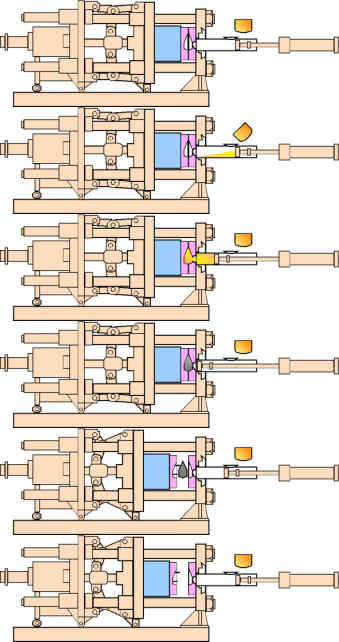
Important Metals. Manufacturing a die cast metal part needs equipment like hot-chamber or cold-chamber machines. These machines have the die or mold in them, as well as the injection component for a high pressure mechanism. This will push the molten metal into the die chamber and fill the mold. The machine also has a mechanism to separate and eject the finished product.

What is die casting? How do you define die casting? Simply put, die casting is a process of manufacturing metal parts by molding the molten metal. The metals used are ductile, malleable metals with a high degree of heat and electric conductivity, high strength and corrosion resistance, wear resistance, can be easily plated, and with good dimensional stability, namely: aluminum, copper, magnesium, tin and lead, and brass. The metals have low iron content and low melting point, but sometimes ferrous, or iron, metals can be used.

First of all,Manufacturing die cast parts is done in a specialized company with the right equipment and expertise. The finished products are used in a variety of industrial fields: automotive, aeronautics, telecom, factories. Die cast metals are also present in households, in some kitchen apparatus and furniture, bathroom products such as shavers, storage shelves, and even in metal plumbing fixtures. In the field of telecommunications, these die cast parts are present in mobile phone antennas, laptops and computers; and finally they are very popular as die cast toy collectibles.

Metal parts made using the die casting process is everywhere to be found in our modern world. Die cast companies are manufacturing hundreds of products for hundreds of different industries and trades. That is how important these metals are to us today.

Kinetic Die Casting manufactures aluminum and zinc die casting parts. Samples of KDC's work include die cast speaker parts, aluminum tile plates, and other die cast metal parts. If you would like to have a quote please visit our website: Kinetic Die Casting Company

Tuesday, August 23, 2016

Aluminum Hardware Brackets--The Local Favorite

The Strength of Aluminum Hardware Brackets. Often shaped like the letter L, a bracket is a plain inflexible object wherein one limb is vertically attached on the wall while the other limb is horizontally sticking out with the intention of supporting weight or a ledge. Among all kinds of brackets, Aluminum Die Casting Brackets are definitely the strongest and the cheapest. As a matter of fact, the total weight of an aluminum bracket is just 1/3 of the total weight of a steel bracket. The main types of aluminum brackets which are made of high-quality aluminum materials are the multipurpose servo bracket, right angle surface bracket and angle bracket.

The favorite of die casting companies is Aluminum Brackets Hardware because it is strong, lightweight and inexpensive. Also believed to be Aluminum Brackets Hardware are the aluminum lighting furniture brackets, which by the way replaced the former lantern clinching brackets. Moreover, Aluminum Brackets Hardware can be decorated or coated.

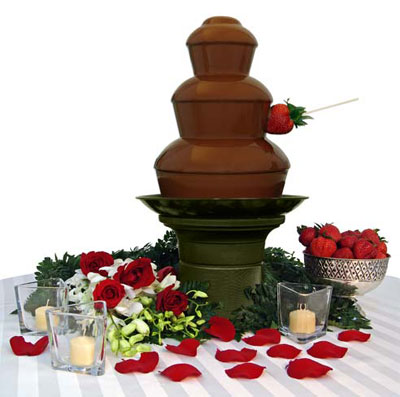
A chocolate fountain needs aluminum brackets to support and hold its heater cover, while aluminum brackets at barns are used to hold and secure things on the wall. The small brackets are typically used to hold up mirrors attached on dressers, support two drawers jointly and brace ledges in cabinets. The seat-back tray table of the Boeing 747-700 is braced with a pair of aluminum brackets, sufficiently tough to carry laptops, plates, cups or glasses, and the hands and arms of the plane passengers.

Without any doubt, Aluminum Brackets Hardware has lots of functions especially in newly-built and already built homes as well as aircrafts.

Kinetic Die Casting is located in Southern California. KDC specializes in aluminum and zinc die casting tooling. If you would like a quote, please visit our website:Kinetic Die Casting Company

Tuesday, July 26, 2016

Lighting Up Your Home with Aluminum Lighting Fixtures

Aluminum Lighting Fixtures to Lighten up Your Home. Lighting fixtures are primarily for creating artificial illumination. A lighting fixture consists of the light source, an opening that could either have lenses or none, a light reflector that controls the light and directs it towards a certain point, an electrical counterweight, a light housing for protective purposes, and a cable connecting to the power source. Lighting fixtures can be classified as either outdoor or indoor lighting fixtures.

Before the introduction of die casting, parts used in lighting purposes were made by welding parts together. This process was impractical; it was slow, expensive, and labor extensive. Today however, lighting fixtures are produced through die casting, a process which involves the pressurizing of molten metals into mold cavities, which is followed by a cooling process. Die casting is extremely advantageous if your objective is to manufacture substantial amounts of small to medium-sized lighting parts with excellent details and features.

Furthermore, Aluminum, a strong, lightweight metal, is the widely-used metal for die cast lighting parts because of its sturdiness, electrical conductivity and good thermal properties. The production of aluminum die castings is also better than with other metals because the former could be produced in net shape, doing away with welding.

Die cast aluminum lighting fixtures are used extensively in the lighting components found in parking garages and medical offices. These are also incorporated in street traffic lights, outdoor lights, wall lighting fixtures and bullet lighting fixtures. Aluminum lighting fixtures are also used for aerospace lighting, medical lighting, automobile lighting and marine lighting.

Kinetic Die Casting is a Los Angeles die casting company that manufactures aluminum and zinc parts. If you would like more information, please visit our website:Kinetic Die Casting Company

Tuesday, June 28, 2016

Manufacture Die Cast Parts

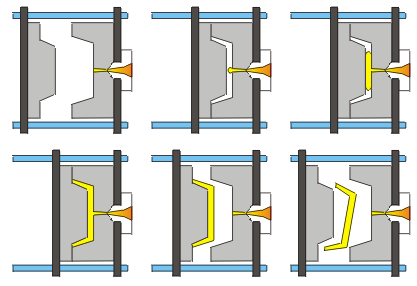
How to Manufacture Die Cast Parts. In manufacturing die cast parts, four major steps are to be followed in the die casting process. The first step involves the spraying of the mold with lubricant in order to control the temperature of the die and, later on, assist in the easy removal of the casting. Once the mold is closed, molten metal is shot directly into the die under high pressure. The pressure is maintained until finally, the die casting successfully solidifies or hardens. When the die is opened, ejector pins release the shot. Scrap material must then be separated from the casting by hand or sawing or by using a hydraulic press or a power press; said scrap includes the runners, sprues, flash, and the gate.

What is the die casting method? What is great about the die casting method is that it does not leave scrap material rotting in the trash. The die casting method is known to be friendly to the environment compared to other casting methods out there. One of the reasons for this reputation is the fact that scrap material in the die casting process is recycled by reheating and remelting them again. This way, no metal is left to waste and no additional harm is directed into the environment in manufacturing die cast parts.

Furthermore, Manufacturing die cast parts calls to action die cast designers and die cast engineers. Die cast parts can come out in varying shapes and sizes, depending on the specifications of the customer. They have multiple finishing options, including those related to surface, texture, and overall look and feel. Die cast designers can think of ways to make the separation of scrap material more accurate so as not to deform castings. Die cast engineers, on the other hand, can think of ways to make production more receptive to greening techniques, which are fast becoming a trend in industrial businesses these days, as prompted by the declining condition of the planet.

Kinetic Die Casting is a california die casting company that manufactures die cast parts. If you would like more information or request a quote, vist our website:Kinetic Die Casting Company

Tuesday, May 17, 2016

American-made Product

An All-around Aluminum. It is a commonly known fact that equipment and accessories that the military use are mostly made up of aluminum parts made from aluminum die casting company. But did you also know that other people get to use these parts, too?

Normal people who are not in the service also make use of these aluminum die cast parts. Aluminum boxes, aluminum enclosure parts, and aluminum box housing parts also make use of these aluminum die casted components. In the automotive industry make use of these enclosures as the engine compartments automobiles and trucks are made up of these. Companies who produce parts for computers as well as communication companies also use these parts as housing for disk drives and enclosures.

Also, the food industry makes use of these aluminum die casting parts as heater plates used in chocolate fountains are made up of these aluminum parts. Having these chocolate fountains in your parties and celebrations definitely makes the festivities more fun and memorable. All that made possible by these aluminum parts.

Homes also make use of these aluminum parts. Tiles that are used on roofs are usually made from them as well as roofing tile molds.

Aside from this already long list of things that are made from aluminum die casting parts, there are still a lot more stuff out there that cannot be made without these aluminum parts. Having that said, these aluminum die casting parts then are very important components in the everyday things and equipment that we use. Without them, the everyday comfort that we get from the things that they make up would not be available anymore.

Kinetic Die Casting manufactures products like aluminum hardware, and aluminum boxes. If you would like more information on Kinetic Die Casting, please visit our website:Kinetic Die Casting Company

Tuesday, May 3, 2016

Die Cast Parts: Precious Products of Precision

Die Cast Parts: Precious Products of Precision. Because the popularity of die cast parts has reached new heights in recent years, some people think making them is just easy. They couldn’t be more wrong. Die casting company makes parts are made using a process that is strict, accuracy-conscious, and perfection-oriented. This process is no less than die casting, one of the most preferred methods in casting these days because of the vast number of advantages they offer to both consumers and manufacturers.

Die casting is an old process that involves the injection of molten metal into reusable molds, also known as dies, with the use of high pressure. There are different kinds of metal that can be used in the process; they may be ferrous or non-ferrous. Held under high pressure, the chosen metal remains in the chamber until it solidifies or hardens into a net-shaped part and becomes what becomes known as a die cast part. Precision is the key in making die cast parts that are shaped and measured to perfection.

Furthermore, the die casting process is regarded in the metalworking industry as the most versatile one. No other metal casting process existing today allows for a wide array of options in sizes, shapes, design intricacy, measurement preciseness, and dimensional tolerance. There are so many things that can be done using the process in order to satisfy consumer needs for both commercial and industrial purposes. Homes and offices, as well as private and public entities, can benefit greatly from the choices available. The process of making die cast parts is indeed a valuable one.

Kinetic Die Casting manufactures aluminum and zinc die casting parts. Samples of KDC's work include die cast speaker parts, aluminum tile plates, and other die cast metal parts. If you would like to have a quote please visit our website: Kinetic Die Casting Company

Tuesday, April 19, 2016

Roofing Materials

Roofing Materials. Damage from extreme weather conditions such as storms and hurricanes can play havoc on inferior roofs. This means that using quality roofing materials should take precedence when you are a contractor building a house, or in the process of a roof remodeling project.

Concrete roofing tiles have evolved through the years as one admirable type of roof tile materials. They used to be manufactured in the form of huge sheets of tiles in the past, but were found to last on an average of only 10 years. When they were made in smaller roof tile sizes, they could last for more than 20 years and were considerably hardier compared to the larger sheets.

An advantage that manufacturers discovered about concrete roofing tilemolds materials is that they took to pigment easily. This meant that the tiles could be manufactured in a variety of different colours, making them more versatile as decorative pieces, as well as making them attractive on roofs. In addition, their durability kept them resistant to breakage, and their heavy weight kept them from suddenly blowing away in a strong wind.

Furthermore, a lot of people in the roof tile industry realized that with only a minimum investment and a small shop, they could start a business producing concrete roof tiles. All they needed was a small start-up cost, which included easily-purchased equipment, mixes, and other supplies.

***** Kinetic Die Casting manufactures die casting metal parts creating products like roofing tile molds, lighting parts, and military parts. If you would like more information about Kinetic Die Casting, visit our website:Kinetic Die Casting Company

Tuesday, April 5, 2016

Aluminum Manufacturing is Essential!

Aluminum Manufacturing is Essential. Aluminum is the thirteenth element in the periodic table. Aside from nitrogen and oxygen, this metal is one of the most abundant elements that can be found in the Earth’s crust. This metal is an important component in manufacturing transport vehicles, building construction, packaging and many more. Kinetic Die Casting Company is an aluminum parts manufacturing company.

Heavier vehicles require more fuel to accelerate. With that concept, manufacturers choose aluminum because it is light weight. Aluminum manufacturing of auto vehicle parts results to low fuel consumption. Also, aluminum plays an important role not only on land vehicles but also in the aircraft industry because 80% of most planes are made up of aluminum.

Also, it doesn’t require further painting and weight of airplanes because it can resist corrosion. Paint in airplanes is considered as unnecessary weight.

Furthermore, Aluminum is also best known for its excellent thermal and electrical conductivity. It is better to use this as a conductor instead of copper. It is the frequently used material in major electric transmission lines. Aluminum part manufacturing somehow is responsible why you can turn on your lights, your computer, and microwave at home.

Because of Aluminum's ductile property and low melting point, it can be processed and formed in many ways. This metal is an excellent reflector of light and heat as well. Most reflectors used in rescue blankets and light fittings are made up of aluminum.

Aluminum foil is very common to each home. This is also made up of aluminum and its non-toxic. Once the food is wrapped, the aroma nor the taste doesn’t come out. That is why it is very ideal to use in packaging products such as pharmaceutical or food. Also, this metal is also used in canning the processed food in food manufacturing plants.

Aluminum manufacturing makes possible some simple but important functions in our daily lives.

Kinetic Die Casting manufactures aluminum and zinc die casting parts. Samples of KDC's work include die cast speaker parts, aluminum tile plates, and other die cast metal parts. If you would like to have a quote please visit our website: Kinetic Die Casting Company

Tuesday, March 22, 2016

Die Cast Tooling Info

Die casting tooling is also known as die casting dies, die casting molds or insert die. Die casting tooling also comes in different sizes, values, and styles. Die casting tooling comes either with a single cavity or multiple cavities. The cost for die cast tooling varies for trim dies and cavity inserts. Tooling can be damaged and wear off from erosion if the cavity inserts are soft. It requires expertise and understanding on how to mold tooling for aluminum. Kinetic Die Casting Company makes die cast tooling. Tooling insert is the cheapest form of die cast tooling. It requires heat treatment to extend its tooling life. The die cast tooling insert can wear away and be easily damaged due to erosion of the molten metal. There are die casting toolmakers that don’t use enough steel. Therefore it results to low potential life of the inserts. Furthermore, Inserts must be mounted into a holder that allows the aluminum to inject into the insert. A pathway should be provided for the metal to go in. These holders are commonly called as family die, unit die or mold base. If you can’t get yourself good quality die casting tooling inserts for your aluminum because it is expensive, try to get a prototype. The prototype insert is can also be used to test and create a design. It is somehow less expensive compared to a hardened cavity insert and it takes less time to produce. However, this tool can be damaged easily and since it is not as good as a steel insert, it can’t be modified. Kinetic Die Casting manufactures aluminum and zinc die casting parts. Samples of KDC's work include die cast speaker parts, aluminum tile plates, and other die cast metal parts. If you would like to have a quote please visit our website: Kinetic Die Casting Company

Tuesday, March 8, 2016

Aluminum Die Casting has a Low Carbon Footprint!

Low Carbon Footprint of Aluminum Die Castings Should Be Marketed to Industry. The die casting industry has long been built on recycling. The metal alloys used by the die casters are produced from recycled raw materials, created with far less energy than is required for virgin alloys. More than 95% of the aluminum die castings produced in North America are made of post-consumer recycled aluminum, helping to keep the aluminum content of municipal solid waste to less than 1%. In response to questions from NADCA member companies about the carbon footprint of automotive die castings compared to alternative materials and processes for automotive components, this Carbon Footprint study by William A. Butler was authorized. Specifically, the study compares the cradle-to-grave carbon footprint of aluminum and magnesium die cast components with the carbon footprint of injection molded plastic components. The results of the study provide environmental impact information to the die casting industry, provide a baseline for further component carbon footprint evaluations in the future and identify opportunities for industry improvement in the environmental impact of die casting operations. One of the most significant study results is that — neglecting the contribution of product use to the total carbon footprint — aluminum die casting has the lowest carbon footprint because of its use of secondary aluminum alloys and its ability to be recycled. NADCA members can download The “Carbon Footprint” of Aluminum and Magnesium Die Castings Compared to Injection Molded Components at www.diecasting.org/members. Kinetic Die Casting utilizes die casting to manufacture parts like aluminum car parts, airplane parts, lighting parts and much, much more. If you would like to request a quote, please visit our website:Die Casting part quote

If you would like more information, please visit our website:
Kinetic Die Casting Company 6918 Beck Avenue, North Hollywood, California 91605 USA
E-mail sales@kineticdc.com Toll Free: (800) 524-8083 Local: (818) 982-9200 Fax: (818) 982-0877

Tuesday, February 23, 2016

Heat Sinks for Your Convenience

Aluminum Heat Sinks for Your Convenience. Aluminum heat sinks have the ability to absorb and disperse heat from another object through thermal contact since aluminum has good electrical and thermal properties. This amazing characteristic makes aluminum heat sinks ideal for cooling purposes. An aluminum heat sink is a piece of molded aluminum usually placed on top of a processor. In most cases, you would first have to remove the heat sink before you would be able to see the processor.

Whenever or wherever a need for effective heat dispersal exists, there will undoubtedly be aluminum heat sinks installed. Refrigeration is the foremost industry that employs the use of heat sinks. The aluminum heat sinks produced these days come in various shapes, forms and sizes. The standard heat sink though, contains long fins and thin protruding extensions for directing the heat coming from the processor to the cooler setting inside the heat sink. Majority of today’s heat sinks available in the market are furnished with fans that blow cool air towards the fins to disperse the heat more efficiently. These fans are usually situated on top or in the middle of the fins.

Furthermore, Die Cast Aluminum Heat Sinks are designed in such a way that less machining is necessary. The production rate averages from 250 to 2,500 heat sink parts a day. Another great think with aluminum heat sinks is that they are completely lighter than their stainless steel equivalents, having a specific gravity of 0.10 pounds per cubic inch. They are also easily grounded since aluminum is electrically conductive.

Also, Aluminum heat sinks are used in cell phones, motor housings, circuit boards, refrigerators, airplane parts, satellite components, automotive, lighting parts, microwaves, etc.

Kinetic Die Casting manufactures products like heatsink die casting, aluminum housings, and lighting fixtures.

If you would like more information, please visit our website:
Kinetic Die Casting Company 6918 Beck Avenue, North Hollywood, California 91605 USA
E-mail sales@kineticdc.com Toll Free: (800) 524-8083 Local: (818) 982-9200 Fax: (818) 982-0877

Tuesday, February 2, 2016

Aluminum Heat Sinks

Aluminum Heat Sinks are objects that draw heat from another object through thermal contact. They are mostly used in electronics and automobiles. Aluminum is a lightweight and sturdy material that has good thermal and electrical properties, that’s why it has become the material of choice for most heat sinks.

First of all, Aluminum heat sinks are produced by die casting by a Die Casting Company, a process wherein molten metal is forced is forced into mold cavities. The die casting process is beneficial if you are producing large quantities of small to medium sized automotive parts with good details. Prior to the introduction of die casting, most heat sinks are made by welding several pieces together and drilling holes, if required, after. This process is time consuming, costly, and labor extensive. Die cast aluminum heat sinks are good as raw parts but they can be powder coated and anodized easily.

Second of all, Die Cast Aluminum heat sinks can be manufactured in a much faster rate—ranging from a few hundreds to a few thousands small to medium sized parts a day—because they can be produced in net shape and there are no welding and drilling methods needed after. Die casting saves time, money, and energy all together.

Thirdly, Die cast aluminum heat sinks are definitely lighter than their stainless steel counterparts, with a specific gravity of about 0.10 pounds per cubic inch. Because they are electrically conductive, aluminum heat sinks are used for radio frequency (RF) and electronic magnetic inductance (EMI) shields. This quality also allows them to be grounded easily.

Aluminum heat sinks are used in airplane parts, circuit boards, microwaves, cellular phones, satellite components, laser components, motor housings, automotive, lighting parts and many more.

Kinetic Die Casting manufactures aluminum and zinc die casting parts. Samples of KDC's work include die cast speaker parts, aluminum tile plates, and other die cast metal parts. If you would like to have a quote please visit our website: Kinetic Die Casting Company

Tuesday, January 26, 2016

Aluminum Hardware Handles

Aluminum Hardware Handles. Handles are installed on anything that requires the manipulation of the human hand in pulling or turning. House doors use handles to be able to open or close the door. The same thing goes with car doors. Cabinet handles are more decorative compared to those installed on car or house doors. Horizontal pull handles on the other hand, are widespread. Examples are handles installed on drawers, handles on doors without latches, and the handles on the outside of car doors.

The various types of handles include folding, Standard Square, positive locking, oval, wire, and extruding. Most of these are made in aluminum, stainless steel, or brass. The most popular ad widely-used however, is aluminum handle ware.
Most of aluminum hardware handles are made through die casting, making its production a lot better than with other industrial processes. In addition, compared to other metals, aluminum is easier to process. Aluminum can also be polished to a high sheen, making it ideal for handles. The rate of manufacture of aluminum hardware handles is from a few hundred to a few thousand handles in a day.

Furthermore, aluminum is also ideal because there are some handles which are decorative like the ones used in cabinets. Aluminum is easier to decorate than other metals because the ornaments and other decorative details can easily be added to the mold cavities that resulted from die casting. Aluminum handles are also stronger than their stainless steel counterparts because the former can be designed with support components such as strengthening radii or ribs.

Aluminum handles ware include handles on home doors, car doors, sliding doors, and cabinets, shower handles, door knobs, door hinges, bolts, stops, locks, drawer pulls, lifts, faucets, and more.
Kinetic Die Casting manufactures custom metal parts to their customer. If you would like more information about Kinetic Die Casting, please visit our website:Kinetic Die Casting Company

Tuesday, January 12, 2016

Die Casting Parts used by Customers

Die Casting Parts used by Customers. Die casting is a process that involves three steps to accomplish. The first step is to melt raw material, in this case metal alloy, by subjecting it in intense heat. Once the metal alloy has melted into liquid, it will then be injected in large casings made of steel commonly referred to as molds or castings. These casings would give the liquefied metal its new shape. The mold will then be cooled down so that it will harden once again and there you have it. A common metal used in this process is aluminum, but other metals such as zinc can also be used. Consumer Parts Die Castings is an industry in itself which caters to many manufacturers around the world.
Several products such as electronics, automobiles and household appliances make use of aluminum parts. Aluminum is a favored metal alloy for many manufacturers because of its characteristics. It is almost as strong as steal but it carries less weight compared to steel and most other metals for that matter. At the same time, aluminum is cheap and easy to obtain. For the manufacturers that provide these products which use aluminum parts, they need different kinds of parts which can be provided by die casting. Consumer Parts Die Castings fast and is cheap, which is why it is a choice of many manufacturers around the globe.
Customer Parts Die Castings can create bulk orders in little time. It is a valuable asset for any manufacturer to have someone provides them with die casted aluminum parts. It is even better if they have their own die casting machinery.
Kinetic Die Casting manufactures custom metal parts to their customer. If you would like more information about Kinetic Die Casting, please visit our website:Kinetic Die Casting Company

Tuesday, December 1, 2015

Car Radiator has Die Castings Parts

Your car radiator is the primary cooling mechanism for your engine. Radiators are a simple and elegant solution to the need for engine cooling. Car radiator parts are mostly made of aluminum. Light and strong, aluminum is great for making car radiators. It is the material of choice for most of today’s radiators. Light and intelligently designed, aluminum radiators are standard on many of today’s new cars and trucks. Aluminum Car Parts

A sure sign of a problem is a small leak on your car Radiator. A cooling system that runs low too often is less efficient and you can damage your cooling system by letting the coolant level get too low. Too little coolant flow can be bad, but at normal and high operating temperatures, the rate at which coolant moves through the radiator does not change the amount of heat that is dissipated by the cooling cores. The amount of cooling will not be reduced even when the mean temperature of the coolant rises and flows faster.

Several cheap coolants do not have the corrosion protection, PH balancing, or sediment prevention that the top-quality coolants do. These low quality coolants do not have the same additives of name brand coolants. To help your engine stay cooler, rev up your engine slightly when you are overheating in traffic to help push more air across the cooling cores and more coolant through the engine.

Water-cooled car radiator parts have an automatically controlled electric fan on the radiator. The way the system is supposed to work is that, after the engine is started, the thermostat on the engine stays closed until the coolant temperature at the ENGINE reaches 87C (189F) degrees. It is the responsibility of the Radiator to keep the coolant temperature from running too high. However, if the temperature is too high it is not necessarily the radiator.

Therefore, a poor radiator cap will not last as long or stay properly calibrated, and either open at too low or two high a pressure. Make sure your radiator cap is the proper one for your cooling system. Higher pressure means a higher boiling point, which means more efficient cooling. A new radiator cap is usually all that is required for this (but don’t over pressurize your radiator cores and wreck the whole system).

Several Car Radiators' cooling system failures arise from poor radiator maintenance. Many radiator problems can be prevented with regular maintenance and periodic professional inspections of you car radiator and cooling system. The most common radiator problems are: leaky fittings or seams, fin deterioration and bond failure, electrolysis, cracked tank, and fan damage.

Kinetic Die Casting manufactures aluminum and zinc die casting parts. Samples of KDC's work include die cast speaker parts, aluminum tile plates, and other die cast metal parts. If you would like to have a quote please visit our website: Kinetic Die Casting Company

Tuesday, November 24, 2015

Aluminum Auto Parts--Who uses Them?

Aluminum Auto Parts are Now Widely Used by Many. Before, most of the car parts were made from steel or iron because manufacturers believed that a car must be strong, hence, strong metals must be used in making its parts. However today, majority of cars are built with aluminum auto parts. First, aluminum is lightweight, reducing the total weight of the automobile, allowing it to get better fuel economy. It is also very strong and non-corrosive. The top car manufacturers love die cast aluminum auto parts because thousands of parts can be produced annually at a very low cost. Others even have contracts with aluminum die casting companies to produce aluminum auto parts for them. There are also companies which manufacture auto parts intended to be sold in stores. Manufacturing companies prefer die cast aluminum auto parts than those produced by forging, extrusion, or other manufacturing processes primarily because die cast parts are less expensive and of better quality.

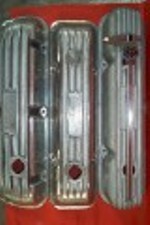
Aluminum auto parts include aluminum die cast handles, aluminum valve aluminum covers, aluminum brackets, and aluminum wheels. The handles are used for car doors and other aluminum hardware handles used for opening the trunk, console and hood of the car. The valve covers are usually die cast because die cast valve covers already has a chrome look even without chrome plating. Valve covers also need to disperse heat and aluminum is an effective material for thermal transfer. The brackets hold many of the car’s engine components into place. These also hold the air conditioner and alternator in place. The wheels are made from aluminum, not magnesium, which is a common misconception. Aluminum can also be polished to a high sheen, making it ideal for wheels.

Kinetic Die Casting can manufacture aluminum automobile parts, heat sinks, aerospace parts and much more. If you are looking for aluminum or zinc parts, visit our website Kinetic Die Casting Company

Tuesday, November 17, 2015

Prototype Parts

Custom Metal Parts - Prototype Parts Options

Stereo Lithography ( SLA )

First of all, SLA is a process that converts a three dimensional (3D) file into a plastic part in a matter of a few hours or days. Kinetic Die Casting has provided many SLA parts to prove a design for our customers. Sometimes a customer needs a sample of what will be produced in the die casting mold to prove "form, fit or function". Many times a simple SLA in hand answers many questions. SLA parts are fragile and can be broken if dropped.

Prototype Casting

Secondly, Prototype castings are produced using a special SLA as a template for a form and then a few castings can be produced. The process is very fast and accurate for prototype custom metal parts. Many times parts can be produced in less than a few weeks. These parts are aluminum and are more sturdy than the plastic SLA parts.

CNC Custom Metal Parts CNC machining of custom metal parts is less expensive when producing more than a few parts for prototype. The 3D model can be translated into a machining program and as many as a few hundred parts can be produced in a week. These parts are machined in metal, usually aluminum but can be steel. Steel is heavier and steel may not be stronger than aluminum.

Custom Metal Prototype Parts

Kinetic Die Casting makes great quality aluminum, and Zinc Die Casting If looking for a job or would like a quote please visit our website:Kinetic Die Casting Company

Tuesday, October 27, 2015

The History of Die Casting

The History of Die Casting. To understand the die casting process is to understand the history of metallurgy and to peruse the history of man. Man has been shaping metal since antiquity. We fashioned our tools, weapons, and implements from the metals we found in the earth. The first metal we used was gold, then copper. Gold exists in its natural state and did not require much processing, but copper had to be smelted. This was the start of a crude metalworking industry.

First, the manufacturing of die cast parts in modern times is a far cry from those first attempts of civilization. Now it is not an outdoor bonfire that we use, but a high tech die casting machine inside a die casting company to melt and mold our metals. Aside from copper, we have discovered more useful metals like aluminum, zinc, tin, brass, magnesium, and lead.

Second, the parts we manufacture out of metal are not anymore crude knives and arrowheads, but precision parts for modern industries like telecommunications and automobiles, mobile phones, fiber optics, computers and laptops, children’s toys and collectibles such as die cast model cars and airplanes.

Furthermore, the process we use is high pressure injection molding and a four step procedure involving lubricants and shots and ejector pins, or a heated-manifold what they call direct-injection die casting procedure which is a less complicated procedure than the first one, no matter how it sounds.

The metal parts that we manufacture nowadays are various things like mobile phone antennas, electronic connectors, industrial housings and fittings, bicycle pedals, sprockets, gas knobs and valves, handles and lids, door hinges, fasteners, doorknobs and zippers.

Kinetic Die Casting Company can manufacture aluminum car parts, aluminum hardware, and Aluminum Lighting Partsaluminum lighting parts.

Tuesday, October 13, 2015

Molds that Fit

Molds that Fit!Die Casting Tooling Molds. The process known as die casting is mainly used in the metalwork industry to create a great number of parts of the same specifications by forcing molten metal which are under high pressure into molds or Die Cast Tooling. This process results in uniform results from most of the products and the finish is smooth and of high quality. The dimensions of each part is almost exactly the same with only about 0.2% difference which means that there is little need for post production clean up or machining.

In the die casting industry, there are two machines used, namely the hot chambered die cast machine and the cold chambered die cast machine. Each machine has its own distinct advantages and disadvantages such as the hot chambered die cast machine can finish the product in less time than the cold chambered die cast machine; however there are non ferrous metals that cannot be die casted using the former. Whichever machine a company is using, it is essential that they give some time and thought into the Die Casting Tooling as these are the most crucial tools of the whole process.

Furthermore, die cast molds or Die Casting Tooling can be very expensive. They are made from hardened steel and they come in different shapes and sizes. Their cost can vary from a couple hundred dollars to several thousand dollars, depending on the size and complexity of the mold. There are single cavity molds and several cavity molds to cater to whatever the manufacturer needs to accomplish.

Kinetic Die Casting manufactures products like heatsink die casting, aluminum housings, and lighting fixtures. If you would like more information, please visit our website:Kinetic Die Casting Company

Aluminum Parts Die Casting Company