Showing posts with label metal. Show all posts

Tuesday, November 17, 2015

Prototype Parts

Custom Metal Parts - Prototype Parts Options

Stereo Lithography ( SLA )

First of all, SLA is a process that converts a three dimensional (3D) file into a plastic part in a matter of a few hours or days. Kinetic Die Casting has provided many SLA parts to prove a design for our customers. Sometimes a customer needs a sample of what will be produced in the die casting mold to prove "form, fit or function". Many times a simple SLA in hand answers many questions. SLA parts are fragile and can be broken if dropped.

Prototype Casting

Secondly, Prototype castings are produced using a special SLA as a template for a form and then a few castings can be produced. The process is very fast and accurate for prototype custom metal parts. Many times parts can be produced in less than a few weeks. These parts are aluminum and are more sturdy than the plastic SLA parts.

CNC Custom Metal Parts CNC machining of custom metal parts is less expensive when producing more than a few parts for prototype. The 3D model can be translated into a machining program and as many as a few hundred parts can be produced in a week. These parts are machined in metal, usually aluminum but can be steel. Steel is heavier and steel may not be stronger than aluminum.

Custom Metal Prototype Parts

Kinetic Die Casting makes great quality aluminum, and Zinc Die Casting If looking for a job or would like a quote please visit our website:Kinetic Die Casting Company

Tuesday, September 1, 2015

Aluminum Box Castings

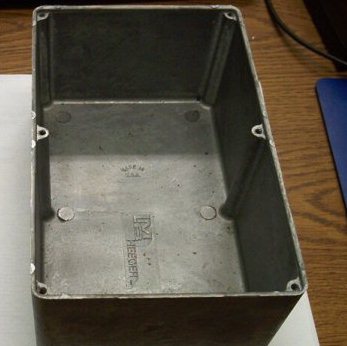
Aluminum Die Casting such as aluminum box castings are produced at the rate of hundreds to thousands of each day in the aluminum die casting process. The box and cover may be diecasted at the same time for a smaller aluminum box and cover.

Did you know that Aluminum Box Castings are a natural RF or EMI shield for your electronic components? What is RF or EMI shielding, you may ask? What does RF and EMI shielding mean? RF (Radio Frequency) and EMI (Electrical Magnetic Inductance) are electronics terms for protection. RF/EMI shielding blocks radio waves and radio frequency from interfering with the electronics inside the aluminum box or prevents the electronic frequency from inside the box from interfering with items outside the aluminum box.

Aluminum is a very electrically conductive material. Electricity flows easily through aluminum. A box made in aluminum would be electrically conductive. Items placed inside an aluminum box can take advantage of this electrical conductivity in many ways. Discussed here is the way radio waves disperse and are absorbed by the aluminum thus protecting electronics inside an aluminum box.

Since they are electrically conductive,Aluminum boxes are a natural ground. Aluminum boxes are many times used as a “grounding plane” for the electrical components inside the aluminum box. This “ground” in this case is a common electrical circuit. Just like the chassis of the typical American Car, sometimes referred to the “negative pole” or “ground” of your car battery.

RF/EMI shielding are just a few of the many reasons aluminum boxes should be made using aluminum die casting. Kinetic Die Casting, Inc. will be happy to assist in your design and manufacture your aluminum box castings for your products.

Kinetic Die Casting makes great quality aluminum, and Zinc Die Casting If looking for a job or would like a quote please visit our website:Kinetic Die Casting Company
Thursday, March 5, 2015

What is a Die Casting Draft Angle

Die Casting 101: What is a die casting draft angle? Die casting is not very new. Engineers and manufacturers have known the process of die casting metal parts. Die casting refers to the manufacturing of metal parts and products in the procedure of pushing melted metal alloy inside a steel mold. With high pressure and velocity, the melted metal is pushed and hardens into sturdier metal parts utilized in several ways reliant on what the product is formed for (e.g. car parts, compartments, lighting fixtures, and so on). A person might be think, “how can the liquid metal, as it hardens and stabilizes, not get trapped inside the die?” The answer is because of the draft angle.

What is a die casting draft angle? Draft angles are the narrow slopes merged in the surface of the area inside the die cast, typically recognized on both the opening direction of the die and its sliding cores. What is a die casting draft angle for? To answer the question asked above, a draft angle is a factor of the procedure of die casting that allows the die cast part to be expelled in an easier way. Contingent on what the metal part is, the proper measure of drafts should follow to the die cast part in order to support, both the surface of the die cast and the surface of the metal part inside.

What is a die casting draft angle’s operation during die casting? Draft angles are merely combined inside of the die, making its opening broader than its base so that it can effortlessly be ejected.

Kinetic Die Casting blog on Blogspot, writes about Aluminum Die Casting Parts also writes about Die Casting Draft Angle. Look at this website page for more details: www.kineticdiecasting.com/draft.html. Contact Kinetic Die Casting Company at 818-982-9200 or email us at sales@kineticdc.com. Use this webpage to request "die casting part prices" www.kineticdiecasting.com/replyform.html

Thursday, December 4, 2014

Kinetic Die Casting Make Aluminum Boxes

What’s in the box? Aluminum: Kinetic Die Casting Company Makes Aluminum Boxes. A normal individual might be asking questions such as “What are aluminum boxes?”, “What are they made for?”, and “Why aluminum made boxes?” By the word “boxes”, we are talking about those enclosures or housings utilized in engine compartments, computer disk drives, compartments in automobiles, and so on. The purpose of these enclosures is to contain engines and other machines in a sole compartment, making things movable, more organized inside and easier to manage. That is what Kinetic Die Casting Company estimated.

Kinetic Die Casting Company makes aluminum boxes that are real enough to make things easier regarding mechanical sections. And because the parts manufactured are from aluminum alloy, these boxes are electrically conductive, durable and 1/3 lighter associated to typical steel invented enclosures. The production of these aluminum boxes need less work and production by die casting melted aluminum metal. High pressure creates the produced aluminum boxes robust and hardy as the melted alloy steadies. This company is extensively renowned for their aluminum die casting procedures, and Kinetic Die Casting Company manufactures aluminum boxes commonly utilized as chassis, car parts, computer hardware, and also standard compartments in the house.

Anyone can be rest assured of the security of their items or engines as they use Kinetic Die Casting’s aluminum enclosures. Due to the boxes’ metal properties, the items inside the aluminum box are less disposed to marks and breaks. Lastly, due to the aluminum used, Kinetic Die Casting Company manufactures aluminum boxes which are truly inexpensive yet durable, making them economically useful and technologically obliging to man’s everyday life.

Kinetic Die Casting blog on Blogspot, writes about producing Aluminum Parts using the die casting process and discusses Die Casting Military Parts. Look at this website page for more details: www.kineticdiecasting.com/military_parts.html. Contact Kinetic Die Casting Company at 818-982-9200 or email us at sales@kineticdc.com. Use this webpage to request "die casting part prices" www.kineticdiecasting.com/replyform.html

Thursday, August 28, 2014

What You Can Do with Aluminum Die Casting

Aluminum Die Casting Capabilities. Die casting is a procedure that includes manufacturing metal parts. Die Casting is attained by pushing molten metal under high pressure into a mold or die cavity. It significantly diminishes the essential for additional post-production processing by manufacturing high quality surfaces, among other things. Most of the tools and products that people use are created through this procedure.

There are diverse materials used for die casting. One of the most commonly-used materials for this process is aluminum. Aluminum die casting is often used for creating car parts and gears and surgical equipment. It is also the ideal material for networking and telecom infrastructures and equipment.

Among other things, aluminum die casting alloys are lightweight. Aluminum alloys have a minimum section thickness of 0.89 mm (0.035 in) and a minimum draft of 1:100. In spite of their being a lighter material, they nonetheless belong to the stronger and harder types. They have an ultimate tensile strength that ranges from 40.5 to 48/ksi and the hardness is between 80-120 HB. The melting range is about 960-1200 degrees Fahrenheit, making them among the strongest when exposed to tremendously high temperatures.

Aluminum die casting alloys are rustproof, non-staining, and have a high conductivity percentage at 55.6-78.6/Btu/fthr.F (thermal) and 23-31% (electrical) per IACS standard. They are most perfect for multifaceted shapes and thin walls and for most electronic applications. Since most aluminum-based alloys are completed from 95% recycled materials, their use contributes a lot to the promotion of green technology.

Aluminum-based alloys offer a well-organized, cost-effective, and nature-friendly material for developing and refining products and tools that help make people’s lives easier and more productive.

Kinetic Die Casting blog on Blogspot, writes about producing Aluminum Diecast Parts using high pressure die casting and explains: What is Die Casting?. Look at this website page for more details: www.kineticdiecasting.com/what-is-die-casting.html. Contact Kinetic Die Casting Company at 818-982-9200 or email us at sales@kineticdc.com. Use this webpage to request "die casting part prices" www.kineticdiecasting.com/replyform.html

Thursday, June 26, 2014

Airplane Parts made by Kinetic Die Casting

Kinetic Die Casting Company or just KDC is a Hollywood-based jobshop aluminum die cast business. Originated in 1994, it manufactures die casting parts for products of Original Equipment Manufacturers (OEM). KDC is an industry leader famous for manufacturing good quality die casting parts.

Kinetic Die Casting Company has been the favorite supplier of numerous die casting goods. A few examples of die casting parts are aluminum heat sinks, aluminum chassis castings, aluminum handle hardware, cast aluminum parts for music, aluminum automotive parts, aluminum lighting fixture parts, aluminum hardware brackets, aluminum speaker parts, and roofing tile molds.

In recent years, Kinetic Die Casting Company has also ventured into the production and sale of aircraft parts. Because of KDC’s fantastic reputation, it has extended its market to comprise the manufacture and sale of military aircraft parts that need aluminum die casting. Aluminum is the best of material for airplane parts owing to aluminum die cast parts being lightweight.

The procedure of creating aluminum die casting parts for military aircraft is a somewhat difficult one. It all starts with casting parts in aluminum. After a couple of other complex procedures, KDC issues a certificate of USA manufacture, focuses the die casted parts to a final inspection, and packs and ships the merchandises to the corresponding US agencies that request their service.

Other distinguished military products that use KDC-supplied die casting parts are helmet mount for night vision goggles, armored vehicle fire suppression system housing, and missile nose piece, to name a couple. Certainly, Kinetic Die Casting Company has not only revitalized the American die casting industry – it has also become a vital force in the country’s general defense and security program because of its high quality products and services.

Kinetic Die Casting blog on Blogspot, writes about Aluminum Die Casting Parts also writes about Die Casting Draft Angle. Look at this website page for more details: www.kineticdiecasting.com/draft.html. Contact Kinetic Die Casting Company at 818-982-9200 or email us at sales@kineticdc.com. Use this webpage to request "die casting part prices" www.kineticdiecasting.com/replyform.html

Thursday, February 7, 2013

Died, Casted, Beautiful!

“Died, Casted, Beautiful” From forcing molten metal under high pressure into mold cavities, products from and for die casting are formed. Die casting, as we know it, is one fine way to produce small to medium sized parts that has good and intricate details, delicately formed surfaces, and that has consistency in dimensions making it as a very welcome addition in the production industry. Now, some of you may wonder what materials are used in this very clever process. With die casting, raw materials and elements (or non-ferrous metals as they are properly called) like zinc, copper, aluminum, magnesium, lead, and tin based alloys are used. These non-ferrous metals, as their collective name suggests, contains no trace of iron. And although these are the materials that are commonly used, ferrous materials (or materials that has traces of iron) can also be used in this process. And the process itself, you may ask? Well, die casting begins with closing the mold after being sprayed with a lubricant. By spraying lubricant on the mold, the temperature of the die can easily be controlled and the removing the cast later on will be much easier. After this first step, molten metal that is under high pressure of around 10—175 MPa (1,500—25,000 psi) is shot into the die. This amount of pressure is kept once the die is filled and until it is totally solidified. Filling the die by using a high-pressure injection is done so that the whole cavity would be filled before parts of the entire casting hardens. Moreover, using a high-pressure injection helps makers avoid irregularities in form even if there are parts of the cast that are not easy to fill due to its irregular shape. And with a process as long as this one, one can be sure that the results will be beautiful die casted parts.

Thursday, June 16, 2011

The advantages of Aluminum Military Parts over steel

The advantages of Aluminum Military Parts over steel. There are dozens of new innovative ideas when it comes to creating military parts. And one of such innovations is using aluminum over other kinds of steel. But what exactly are the advantages of aluminum military parts over steel?

The use of aluminum in the military can be traced as far 1892 when it was built as part of torpedo boats. Since then, aluminum has been popular in the market for building military parts, especially in combat equipment. But the need for aluminum was actually a result of lack of iron and steel. Alloys were made and certain parts made of aluminum were developed as part of a weapon or a military vehicle.


What’s good about aluminum is it has good thermal properties and can withstand humidity. It is also flexible and it offers freedom from low-temperature embrittlement and provides better rigidity. When combined with a different kind of steel, it is also resistant to corrosive waters. This would also mean better protection without the unnecessary bulk, thickness, and weight. And because it weighs less, for the armors with aluminum alloys, mobility is increased. This also applies to armored vehicles, especially in aircrafts.


Aluminum has now has various uses. It is even used in commercial highway vehicles. But the aluminum for the military is designed for specific purposes. You could try knowing more about it through research, but one thing is for sure, new uses for aluminum in the military are always being updated.


To get a price for aluminum die casting parts or die casting tooling, call toll free 800-524-8083 and ask for sales. Or email us at sales@kineticdc.com for a fast response on a price quote.


Kinetic Die Casting Company


Thursday, March 12, 2009

Hot Chamber Die Casting

Aluminum Parts are not made using hot chamber. In the hot chamber zinc die casting process, slabs of zinc are liquefied inside a furnace with a temperature of approximately 700-800 degrees Fahrenheit. When melted, the zinc metal stays in the furnace. The gooseneck or shot sleeve is immersed in the hot chamber and the molten zinc is injected into the two die halves being held together by the machine. The two halves of the die casting molds are mounted on the die casting machine and the machine shuts off and clamps the two die halves together. The molten zinc metal is under high pressure until such time that the metal solidifies (approximately less than a minute). Die halves then open up and the part or parts are ejected and taken out either manually or automatically. Finishing works include trimming, tumble deburring, precision machining, painting, anodizing, chrome plating and assembly.

Hot chamber zinc die casting machines are used mainly for zinc, lead, magnesium, copper and other low melting point alloys that do not easily erode metal furnace pots, plungers and cylinders. The injection mechanism of a hot chamber zinc casting machine is soaked in the molten metal bath of a metal holding furnace. The furnace is connected to the machine by a metal feed system called gooseneck or shot sleeve. As the injection cylinder plunger goes up, a port in the cylinder opens, permitting hot molten metal to enter into the cylinder. As the plunger moves downward, it shuts the port and forces molten hot metal into the gooseneck and nozzle into the die cavity. When the metal has already solidified in the die cavity, the plunger is removed, the die opens and the casting is ejected.

Monday, March 2, 2009

NTMA Reelection in San Fernando Valley

SFV NTMA REELECTION SHOWS IF IT AIN’T BROKE DON’T FIX IT

SMAC joins with the SFV/NTMA in congratulating Randy Jones, of Xceliron Corp. for his reelection as returning president of the San Fernando Valley Chapter NTMA for 2009.

Randy was one of eight chapter board members reelected in 2009. One new member, Tom Molnar, also joins the board this year, according to Executive Director David Goodreau.

In remarks to members and friends at the installation dinner, held at the Odyssey Restaurant, in Granada Hills, Randy thanked the board for their efforts in 2009. He also thanked the membership for recognizing the successes the organization had in 2008 and for continuing their faith in the leadership shown by him, the board officers and directors.

He also recognized the efforts of chapter Executive Secretary Conny Goodreau and the participation and support shown to the board by Roberto Gutierrez of LA Valley College.

Board members for 2009 in addition to Randy Jones are Board Vice President Jerry Rothlisberger of RMI/Mag-Hytec; chapter Treasurer Bob Thomas, of Kinetic Die Casting, Inc.; chapter Secretary Gerald Stump, of Roberts Tool Company, chapter Trustee Tom Mundy, of Superior Thread Rolling, Board Alternate Trustee Anthoney Mudy of Anmar Precision, and Directors Stan Bennett of Repairtech International, Brad Hart of Roberts Tool Company and Tom Molnar, of Lees Enterprise.

Saturday, August 30, 2008

Sand mixer for melting metal

Slide show of Muller sand mixer from a metal casting forum. Homemade mixer for sand to use for melting metal to sand casting parts at home.


Muller
Aluminum Parts Die Casting Company